Wayfinding is the system of information and design that helps people find their way: in parking, from the street to the facility, to an available space, out to their destination on foot, and back to their car.
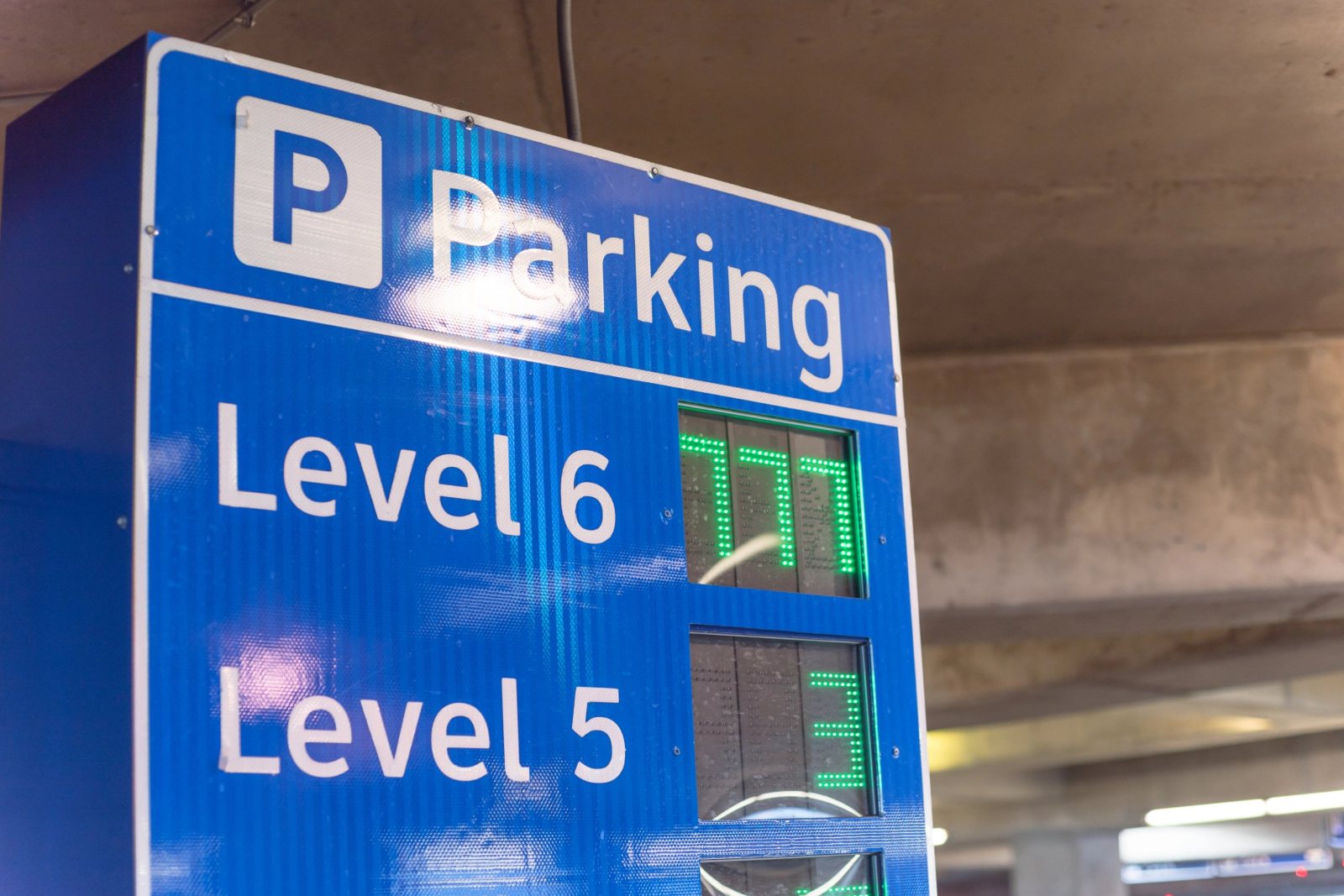
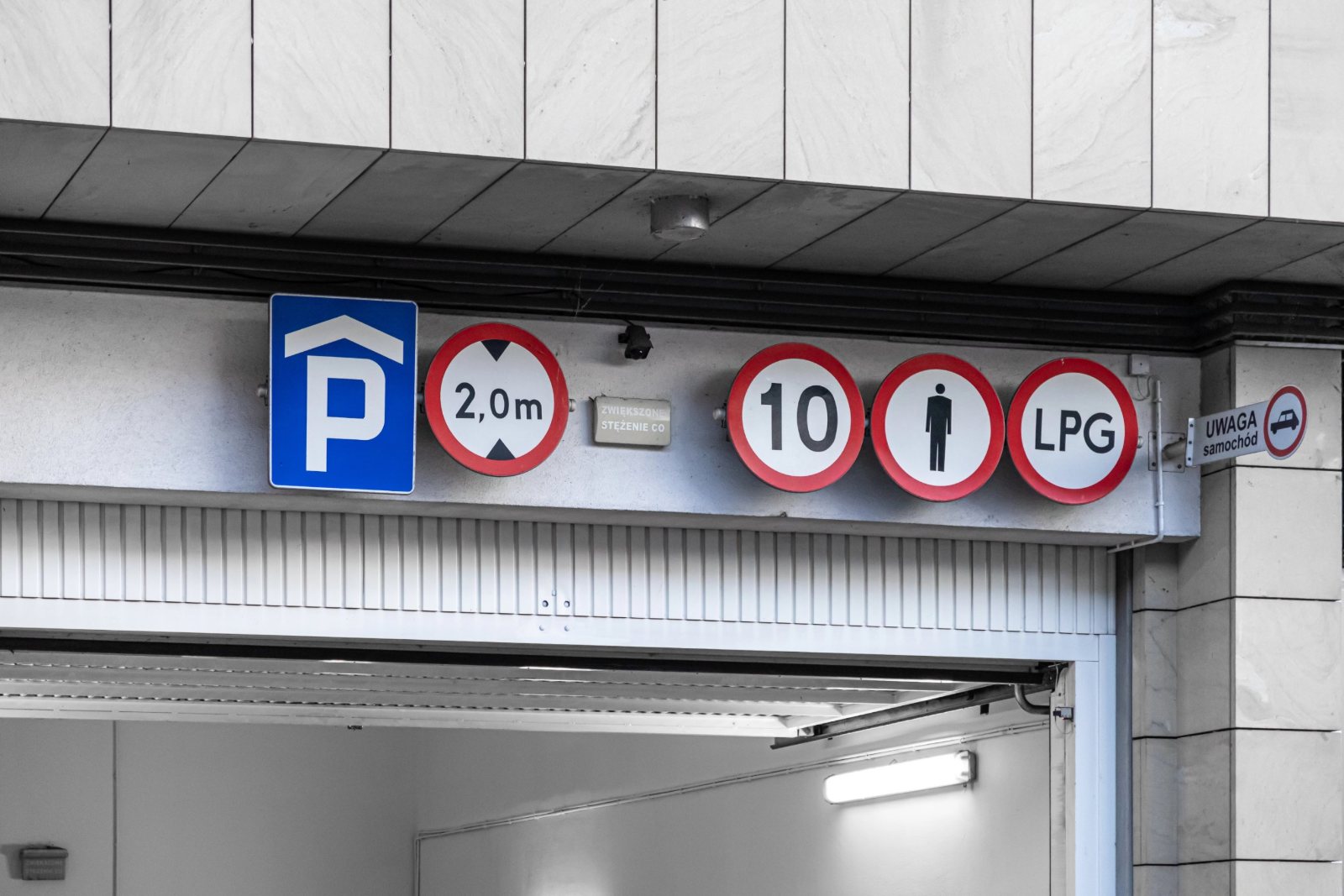
Drag to compare. Regulatory signs tell a driver what is forbidden; a guidance sign with live counts tells them where to go. Photos: aileenchik and trongnguyen / Depositphotos.
It includes signs, but also the layout of the building, sightlines, lighting, color, level names and digital information. Good wayfinding is invisible: drivers make the right turn without thinking, and returning visitors remember where they parked. Poor wayfinding shows up as circling, wrong-way driving and lost cars.
What makes it work
- Before arrival. Clear facility identification and, where available, space counts on the approach. See dynamic signage.
- Inside. Simple circulation, consistent directional signs, and level or row availability. See parking guidance systems.
- On foot. Clearly marked pedestrian routes to visible stair and elevator cores. See vertical circulation.
- Memory. Distinct level names, colors or themes so people can remember where they parked. See cognitive map.
- Legibility. Letter size, contrast and placement matched to approach speed. See legibility.
Approach
- Many designers plan wayfinding by trip segment: approach, entry, search, park, walk, return and exit. See trip segment approach.
The Parkonomics view
Wayfinding is the cheapest capacity in a garage. Every minute a driver spends circling is a minute that stall could have been used, and an impression the customer takes home.
Related terms: Trip Segment Approach, Parking Guidance System, Dynamic Signage, Cognitive Map, Legibility