
01
Context and Thesis
Parking management is being rebuilt from the inside out. What operators sell, how they get paid, what they’re expected to invest, and what clients now demand have all shifted. For decades, the business ran on labor: attendants, cashiers, valets, supervisors, payroll, insurance, uniforms, and the local management needed to keep revenue honest. Technology used to sit alongside that model, supporting it from the edges. Now it is moving inside the model itself.
The traditional operator was, in effect, a labor-and-risk intermediary. Under a management agreement, it supplied the people, supervision, accounting, and operating discipline, while the property owner covered most expenses and paid a fee. Under a lease, the operator took on more of the revenue and expense risk in exchange for the upside. SP+’s own public filings describe management contracts, leases, and ownership as the industry’s three general operating arrangements. 1
A different model is emerging now. Operators and technology-led parking companies increasingly show up with the cameras, license plate recognition (LPR), mobile payment, cloud software, digital credentials, enforcement tools, reservations, analytics, dynamic pricing, remote customer support, and automated access already built in, not waiting for the owner to fund it. Some go further still, offering zero-upfront-capital or Hardware-as-a-Service arrangements: the technology cost sits with the operator or platform, and gets recovered over time through recurring revenue. 8, 21, 22, 25, 26
That changes who the operator actually is. It is no longer just the company managing the people who manage the parking. It is becoming a capital allocator, a technology integrator, a revenue manager, a data custodian, and, increasingly, a strategic partner in the asset itself.
So the real question is not whether artificial intelligence will replace parking jobs. It is this: once the routine transaction is automated, what is actually left that matters, and what will the next generation of parking professionals need to know how to do?
Working Thesis
The threat isn’t that parking operators disappear. It’s that a business model built mainly on reselling labor, insurance, and administrative overhead stops being enough. The operators who win will combine physical operations with technology, capital, revenue intelligence, customer experience, and disciplined risk-sharing.
02
Research Snapshot
| Research signal | What it says about the industry |
|---|---|
| Traditional economics | Management contracts historically paid fees plus reimbursable expenses, while leases transferred more revenue and operating risk to the operator. 1 |
| Technology acquiring operations | Metropolis, an AI/computer-vision company, completed its acquisition of SP+ in 2024, combining a technology platform with more than 4,000 locations and more than 20,000 employees. 6 |
| Zero-CapEx and HaaS | Metropolis markets zero-upfront-CapEx parking technology; AirGarage says hardware, software, and operations are on it; LAZ Technology markets Hardware as a Service. 8, 22, 25, 26 |
| New commercial structures | The market now visibly includes revenue share, per-space recurring pricing, SaaS, per-transaction fees, and owner-purchase alternatives. 8, 25, 26, 33 |
| Automation is task substitution | BLS identifies automated parking machines as replacing attendant tasks and automated LPR as reducing the share of parking-enforcement workers, while total parking-attendant employment is still projected to grow 3% from 2024 to 2034. 28, 29 |
| Professional knowledge is broadening | IPMI’s current PTMP competency framework includes PARCS, LPR, payment processing, PCI, cybersecurity, data analytics, predictive algorithms, demand-based pricing, technology implementation, and emerging technology. 30 |
| Revenue management is becoming a parking job | Reimagined Parking currently recruits a Revenue Management Analyst to analyze demand, occupancy, events, pricing, dashboards, and inventory; Ocra similarly staffs revenue-optimization roles. 17, 32 |
| Platform consolidation | AGC Partners describes parking technology as converging around platform consolidation and AI/automation, while noting that its market figures and adoption estimates are investment-firm analysis rather than universal industry measurements. 27 |
03
Executive Summary
Parking has always looked simpler than it is. A property owner had spaces, an operator supplied people, and customers paid for access. The operator’s pitch was execution, plain and simple: staff the facility, collect the revenue, control expenses, protect the owner, and solve whatever problem showed up that day.
That model is being rewritten, piece by piece. Digital payment means a cashier no longer has to touch every transaction. LPR turns the vehicle itself into the credential. Cloud platforms let the control room live somewhere other than the garage. Reservations and aggregators open up new distribution channels, and dynamic pricing turns the rate sign from a static plank into a managed revenue variable. Underneath all of it, computer vision and AI are quietly picking up vehicle recognition, payment, enforcement, anomaly detection, forecasting, and customer service. 8, 21, 27
Commercial structures are shifting right along with it. Owners increasingly expect the operator to bring the technology, and in some cases the capital too. Newer models bundle hardware, software, installation, support, payment, enforcement, and revenue optimization together, often with little or no upfront investment from the owner. The provider gets paid back through revenue share, per-space subscription, transaction fees, licensing, payment economics, performance incentives, or some blend of all of it. 8, 22, 25, 26, 33
That changes what competition even looks like. A low management fee is no longer necessarily the number that matters most in a proposal. The harder, more consequential questions are: who funds the technology, who owns the data, who eats the conversion risk, who guarantees uptime, who is on the hook for cybersecurity and payment compliance, who controls pricing, who captures the incremental revenue, and how easily the owner can walk away if the relationship doesn’t work out.
It changes the work, too. Routine transaction jobs are the most exposed to automation, that part is not in dispute. But the need for human judgment does not go away. It moves: toward exception management, hospitality, complex operations, field response, maintenance, revenue strategy, technology administration, analytics, privacy, cybersecurity, contract management, and client leadership. 28, 29, 30
So the next generation of leading operators will be judged less by how many people they can deploy and more by how intelligently they can manage an asset. The best of them will combine operational excellence with technology, capital discipline, data fluency, customer experience, and genuine commercial creativity.
Part One
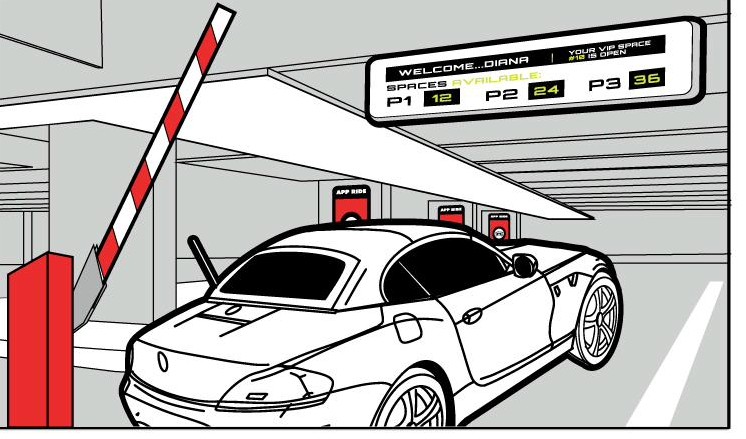
The Business, and How It Began to Change
Where the industry came from: labor, supervision, and risk control, and the first cracks in that model.
04
The Business We Came From
For most of the modern parking industry’s history, labor was both the engine and the foundation of the business. A garage or surface lot needed attendants, cashiers, valets, supervisors, bookkeepers, maintenance staff, and managers to run at all. The operator recruited and trained those people, handled payroll and insurance, wrote the procedures, reconciled the cash, responded when something went wrong, and stood as the accountable party between the property owner and the public.
In a traditional management contract, the property owner generally kept the revenue risk and funded operating expenses, while the operator earned a base fee, sometimes an incentive fee on top, often additional compensation for administrative or ancillary services. In a lease, the arrangement flipped: the operator paid rent or a guaranteed return and took on more of the operating and revenue risk, in exchange for whatever upside was left over. 1
That structure created its own competitive logic. Operators won by being better at staffing, labor relations, local supervision, insurance administration, loss control, cash handling, and client relationships, the blocking and tackling of the business. Procurement conversations centered on management fee, labor markup, insurance, reimbursable costs, and staffing plans. Technology mattered, but mostly as owner-funded equipment sitting on a line item, not as the thing that actually created enterprise value.
None of that knowledge has stopped mattering. Parking is still a physical business. Facilities get dirty. Gates break. Customers get confused. Events create surges nobody fully plans for. Cars hit equipment. Elevators fail. ADA accommodations matter. Weather happens, and someone has to deal with it. What is changing is where the competitive advantage actually sits.
05
The First Evolution
The lease model was the industry’s first real shift in who carries the risk. Instead of simply managing the owner’s operation, the parking company started underwriting the asset itself: guaranteeing rent or a financial return, absorbing the operating expenses, and keeping whatever upside was left. Revenue-share and hybrid structures came later, carving out the middle ground between pure management and a pure lease. 1
These models rewarded operators who actually understood local demand, pricing, expense control, and what a facility was capable of, and they forced a more entrepreneurial mindset onto the business. The operator was no longer paid just to perform tasks. It was paid to get the risk assessment right and pull value out of the asset.
The transition happening now just takes that same principle further. Modern operators are starting to underwrite not just parking demand, but technology deployment, conversion cost, payment infrastructure, software performance, and sometimes even customer-acquisition economics. The operator’s balance sheet and technology stack have become part of the pitch.
06
The Second Evolution
The decisive technological change in parking was never any single device. It is the slow, steady removal of the physical transaction from the staffing model altogether.
Pay stations cut the reliance on cashiers. Mobile payment did away with the walk to the meter. LPR turned the vehicle itself into the credential. Cloud platforms made it possible to watch a dozen sites from one screen. Digital validations replaced the paper chasers and rubber stamps. Reservations opened up advance purchase and demand aggregation. Automated enforcement expanded coverage without needing a new officer for every added hour. And remote intercom and customer-care centers let one trained employee cover several facilities at once, not just one.
The newest layer on top of all this is artificial intelligence. Computer vision recognizes vehicles and supports automated entry, payment, and enforcement. Machine learning and rules engines help with pricing, catching revenue anomalies, forecasting occupancy, and predicting maintenance needs before they become emergencies. Generative AI is starting to handle customer support, summarize operating data, help draft reports, and let managers just ask a question in plain language instead of digging through a dashboard. 8, 21, 27
Which is why the technology stack stopped being back-office infrastructure a while ago. It is the customer experience now. It is the revenue-control system, the labor model, and increasingly, the source of whatever operational intelligence the business has.
07
Parking Management 1.0 to 5.0
| Stage | Primary value sold | Typical economics | Technology role | Workforce center |
|---|---|---|---|---|
| 1.0 Labor Reseller | Staffing, supervision, cash control | Management fee + pass-through costs | Support tool | Cashiers, attendants, supervisors |
| 2.0 Risk-Taking Operator | Operations + revenue risk | Lease, guarantee, revenue share | Efficiency tool | Operations + local commercial judgment |
| 3.0 Technology Integrator | Operations + systems | Fee/lease + tech charges | Core infrastructure | System administrators, remote support, field techs |
| 4.0 Capital + Data Partner | Technology, capital, revenue performance | Revenue share, per-space, transaction, hybrid | Operating platform | Revenue, data, tech ops, customer success |
| 5.0 Mobility Commerce Manager | Access, curb, demand, network value | Outcome-based and portfolio economics | Intelligence layer | Asset strategists, integrators, commercial/data leaders |
These stages overlap in practice, that’s worth saying plainly. A hospital valet stand or a major event can stay labor-intensive even while the same company runs a gateless commercial portfolio somewhere else with centralized remote support. No model instantly replaces the one before it. What actually moves is the center of gravity: away from labor inputs, toward asset outcomes.
AUTHOR FRAMEWORK
Part Two
The 2026 Market, in Five Companies
SP+ and Metropolis, Reimagined Parking, LAZ, Propark, and a digital-native challenger.
08
The 2026 Market
The current market has a lot happening at once, and it’s worth naming all of it: operators are consolidating, technology companies are buying operating scale outright, parking companies are building their own proprietary technology, digital-native challengers are pitching integrated revenue-share models, and specialized firms are turning parking revenue management into its own professional discipline.
AGC Partners’ Q1 2026 market update points to platform consolidation and AI/automation as the two forces dominating the category, and it reports a sharp rise in transaction activity from 2023 to 2025. Treat those figures as directional investment-market analysis rather than an industry census, but the pattern lines up with what’s actually happened on the ground: Metropolis-SP+, LAZ-Indigo Park Canada, Propark’s continuing string of acquisitions, and Reimagined Parking’s capital restructuring. 6, 14, 20, 23, 24, 27
What’s forming above all of it increasingly looks like a parking operating system: hardware, payments, enforcement, demand channels, credentials, pricing, data, customer identity, and field operations, all connected through one accountable platform. Whoever controls that layer gets recurring economics and a shot at capturing the value that used to leak out across a dozen separate equipment, payment, reservation, enforcement, and operating vendors. 27
09
Case Study: SP+ to Metropolis
The SP+ story is one of the clearest illustrations of where this industry has been headed, precisely because it starts in traditional parking operations and ends with one of the industry’s largest operating networks folded into an AI-first technology company.
From Standard Parking and Central Parking to SP+
SP+ traces back to Standard Parking, which started operating lots in Chicago in 1929. Central Parking came along later, incorporated in 1968. Standard acquired Central in October 2012, and the following year, in December 2013, Standard Parking renamed itself SP Plus Corporation. 2
The Standard-Central combination created an enormous footprint overnight, investor materials from the 2012 transaction cited more than 4,400 locations and roughly 2.2 million spaces, and they called out technology development explicitly as one of the benefits of that added scale. 3
SP+ was already moving past traditional operating services well before Metropolis showed up. Its 2023 public filing pointed to Sphere technology solutions, AeroParker SaaS e-commerce, Parking.com digital channels, and revenue-management capabilities as part of what made it competitive. 4
The Metropolis transaction
In October 2023, Metropolis announced a definitive agreement to acquire SP+ for an enterprise value of roughly $1.5 billion. The deal closed on May 16, 2024, after Metropolis raised $1.8 billion in financing to get it done. At closing, Metropolis called the combined company the largest parking network and operator in North America, more than 4,000 locations, over 20,000 employees, and said it would roll its AI technology out across a network processing more than $4 billion in annual payments. 5, 6
SP+ and Metropolis show technology buying operating scale, not replacing its value.
Frank Ching
That framing is worth noting. In its own announcement, Metropolis did not describe SP+ as just an installed base waiting to be automated. It credited SP+’s operational excellence, its leadership, and its customer satisfaction as reasons for the deal. And SP+’s own client communications said the plan was to integrate and build on the Sphere Commerce platform, not simply tear it out and replace it. 5, 7
What changed, and what had to remain
Metropolis now pitches parking as a vertically integrated stack: computer vision, payment, customer identity, data, and local operations, all under one roof. Its current materials lean hard on zero-upfront-CapEx technology, frictionless recognition, revenue performance, and integrated operations. 8, 9
The lesson here is not that a technology company made parking operations obsolete. It’s closer to the opposite: operating scale, client relationships, local execution, aviation and institutional expertise, field teams, and the plain ability to run thousands of real facilities turned out to be exactly what an AI platform needed to become valuable.
| SP+ / Metropolis | What changed | What remains foundational |
|---|---|---|
| Business identity | From outsourced operator toward integrated AI + operations platform | Client accountability and operating performance |
| Technology | From multi-platform solutions toward a more unified recognition/payment ecosystem | Implementation, uptime, field response, exception handling |
| Economics | Greater emphasis on technology, network, payments, and data economics | Asset-level NOI, expense control, client trust |
| Workforce | Automation of routine tasks and centralized intelligence | Local operations, service recovery, safety, complex judgment |
10
Case Study: Reimagined Parking
Reimagined Parking tells a different story, and arguably a more instructive one. Its history shows how national scale gets built through regional acquisitions, how a technology-led owner can try to reinvent what parking real estate is for, and why a company can eventually be forced back to core parking fundamentals.
Building scale through regional parking companies
Impark was founded in Vancouver in 1962 and grew through acquisitions and a push into the U.S. In 2016 it picked up Republic Parking, which brought deep airport, municipal, and healthcare operating capability along with it. Today, Reimagined Parking is the roll-up of Impark, Lanier Parking, Republic Parking, AmeriPark, and Park One. 10, 11, 15
The ParkJockey / REEF technology thesis
In early 2019, REEF Technology, formerly ParkJockey, acquired Impark in a technology-backed deal. A brochure from that period described the combination as creating REEF Parking, with technology framed as the way to expand what parking could offer. 12
The ambition then widened far beyond parking. REEF wanted to turn parking locations into multipurpose neighborhood hubs, ghost kitchens, delivery, logistics, mobility, all stacked on top of the same real estate. Trade reporting later described this stretch as one where the core parking business lost focus, lost market share, and lost key people while management chased the bigger hub concept. 13
No platform gets to ignore parking-management fundamentals and expect the core business to hold together on its own.
Frank Ching
Capital reset and refocus
In January 2025, Reimagined Parking completed a private capital transaction that cut senior secured debt, moved ownership to a consortium of institutional investment-management firms, and put veteran parking executive Rick West in as CEO. 14
The company now describes itself as people-driven and tech-powered, and the numbers back it up. Its published 2026 profile puts 6,500 employees across 2,500 high-density facilities in 275 North American cities, generating 34 million digital transactions a year. Its portfolio-management pitch centers on one point of contact, unified data, portfolio-level pricing, centralized revenue growth, and integrated operations. 15, 16
This return to fundamentals is not a rejection of technology, it’s a repositioning of it, back around the economics and service needs of the actual asset. Reimagined Parking is now explicitly hiring for revenue-management capability: a current Revenue Management Analyst opening covers demand patterns, occupancy, events, pricing strategy, dashboards, and inventory decisions. 17
A transformative first year under West
West’s first full year as CEO showed real momentum. Reimagined Parking added 112 new locations in 2025, and in March 2026 the company reorganized its operations team, under President Roamy Valera, into three focused groups: a Commercial Vertical Team for single- and multi-site commercial real estate clients, an Industry Verticals Team covering healthcare, aviation, and municipal accounts, and a Portfolio Management Team for large, multi-location clients. The company also expanded its in-house integrated reporting, digital marketing, and revenue-management capabilities. 34
The technology side of the “tech-powered” pitch is more than marketing language. Reimagined Parking now runs its own PakNexus technology platform alongside branded products including O-Valet for valet operations and HangTag for permit management: proprietary tools that sit underneath the portfolio-management pitch described above. 34
This case exposes an important boundary for the industry. Parking real estate can absolutely support additional uses. But no platform gets to ignore parking-management fundamentals, demand, pricing, revenue control, customer experience, maintenance, local market knowledge, accountable operations, and expect the core business to hold together on its own.
11
Case Study: LAZ Parking
LAZ Parking is the third route: a traditional operator that transformed itself from the inside, rather than getting acquired by a technology company.
LAZ traces back to valet businesses started in 1981 by three childhood friends, Alan Lazowski, Jeff Karp, and Michael Harth. By 2007, VINCI Park had acquired a 50% interest, and LAZ kept growing through a string of acquisitions, all while holding onto a culture built around employees, clients, and local execution. 18
The pandemic forced the strategic conversation forward faster than anyone planned. By 2021, LAZ was publicly talking about digitally transforming its business, as shifting demand pushed operators to rethink physical facilities, digital payments, hands-free access, EV charging, and new uses for parking real estate. 19
That transformation is visible now in LAZ Technology, whose product suite runs from business intelligence and customer care to AI-powered LPR through JustGo, digital payment products, direct online sales tools, and Hardware as a Service. 21, 22
In July 2025, LAZ acquired a 60% majority stake in Indigo Park Canada, a company it had already been collaborating with since 2021 on business intelligence, e-commerce, and computer-vision AI tools. LAZ was careful to emphasize that Indigo Park Canada would keep its identity, its service culture, and its existing management team. 20
The transformations that work are additive, not substitutive.
Frank Ching
The LAZ story reinforces a pattern that keeps showing up across this industry: the transformations that work are additive, not substitutive. Capital and technology create leverage. But the operator still wins or loses on culture, service, local operating knowledge, client relationships, and the plain ability to execute.
12
Case Study: Propark
Propark Mobility is the fourth strategy: buy established regional operators, keep their local identity, people, and client relationships intact on purpose, and layer national back-office and technology capability on top.
Propark’s acquisition materials lean on legacy, employee retention, culture, client continuity, and national resources, traditional parking values paired with newer technology. Its network today spans multiple acquired parking, valet, transportation, and mobility businesses. 23
In April 2026, for instance, Propark acquired K-7 Parking Company, a Pittsburgh operator founded in 1948 with about 30 locations, citing K-7’s service culture and client relationships as exactly the kind of thing worth carrying forward. 24
The hard part is integrating the scalable functions without wrecking the local operating DNA that made the acquisition worth doing in the first place.
Frank Ching
This model matters because consolidation isn’t only a financial roll-up. The acquired company usually brings scarce local knowledge, trusted managers, labor relationships, municipal familiarity, and client goodwill that took years to build. The national platform adds accounting, HR, procurement, technology, sales reach, and capital. The hard part is integrating the scalable functions without wrecking the local operating DNA that made the acquisition worth doing in the first place.
13
The Digital-Native Challenger: AirGarage
The industry is also getting pushed from a different direction entirely: companies that never inherited the traditional management-fee architecture to begin with. AirGarage calls itself a full-service parking management company built on revenue share, with the hardware, software, and operations supplied by the company itself rather than funded upfront by the property owner. 25, 26
Why fund equipment separately, accept a fragmented technology stack, or pay management economics that barely track performance at all?
Frank Ching
AirGarage’s FAQ says there are no startup costs, that it covers cameras, signage, and installation, and that the revenue-share structure is designed to align its incentives with how the asset actually performs. It also describes ongoing pricing experimentation rather than a once-a-year rate review. 26
The significance here goes well beyond any one provider. Once property owners have seen an offer built around no startup cost, one accountable vendor, real-time data, active pricing, and revenue alignment, traditional operators owe them an answer: why fund equipment separately, accept a fragmented technology stack, or pay management economics that barely track performance at all?
Part Three
The New Economics
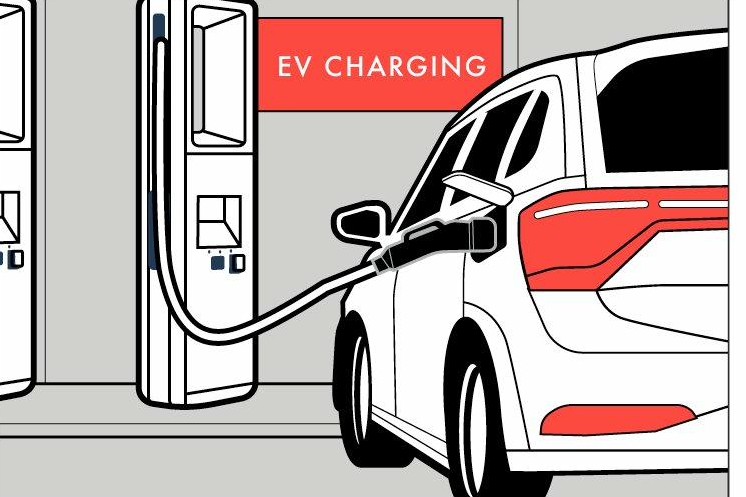
What scale now buys, who funds the technology, and how the contract itself is changing.
14
Consolidation Beyond Geographic Scale
Parking has always been fragmented, and fragmentation historically made acquisitions attractive for two simple reasons: geographic expansion and back-office leverage. The Standard-Central transaction, Impark’s regional acquisitions, LAZ’s acquisition history, and Propark’s ongoing buying spree all reflect that same old pattern. 3, 10, 18, 23, 24
SOURCES: ENDNOTES 2, 3, 5, 6, 10 to 12, 14, 18 to 20, 24
But why scale matters is changing. It now delivers at least five distinct technology-era advantages:
- Capital deployment. funding cameras, communications, software conversion, EV infrastructure, and the other investments owners increasingly expect someone else to make.
- Data scale. more transactions and operating environments to benchmark demand, pricing, equipment performance, and customer behavior against.
- Consumer network effects. a bigger footprint makes shared credentials, apps, reservations, and recognition platforms genuinely more useful to the people using them.
- Centralized specialist talent. revenue analysts, cybersecurity professionals, data engineers, product managers, customer-care teams, and integration specialists who can serve many locations instead of one.
- Acquisition integration. national platforms that can consolidate accounting, technology, revenue management, procurement, and shared services while still preserving the regional relationships that made the deal worthwhile.
AGC Partners’ 2026 market commentary points to the same thing: platform consolidation as a defining trend, with providers competing to own the operating layer that connects hardware, payments, enforcement, and demand channels. 27
15
The Operator as Investor and Underwriter
One of the most significant shifts underway is who actually pays for the technology. It used to be the property owner. Increasingly, it’s the operator or platform provider: Metropolis markets zero-upfront-CapEx technology, AirGarage says it covers cameras, signage, software, and installation, and LAZ Technology sells Hardware as a Service. 8, 22, 25, 26
This is more than a financing convenience, it changes the entire operator-client relationship. When the operator funds the cameras, communications, software, installation, or conversion, it’s making an investment decision, full stop. It has to estimate revenue opportunity, expected contract life, churn risk, equipment life, maintenance, transaction volume, operating savings, revenue lift, and payback period, the same way any capital allocator would.
So the sales function starts to look a lot like underwriting. The operator has to know not just how to run the garage, but whether the deployment it’s proposing will actually earn back its cost of capital. That tends to favor firms with stronger balance sheets, repeatable deployments, integrated technology, and better portfolio data, not necessarily the ones with the biggest sales team.
The sales function starts to look a lot like underwriting.
Frank Ching
16
From Management Fee to Outcome Economics
As technology becomes a bigger share of what’s actually being delivered, the commercial structure starts to look more like software pricing than a staffing contract. The market now visibly runs on revenue-share models, per-space recurring pricing, per-transaction fees, owned-equipment alternatives, and hybrids of all of it. 8, 25, 26, 33
Picture a future parking contract with several revenue streams running at once: an operating fee for physical services, a software license or per-space charge, a transaction fee on payment activity, payment-processing economics, a revenue share tied to performance, and an incentive linked to incremental net operating income.
That can produce real alignment, but it creates new risks too. Percentage-based pricing gets expensive fast as revenue grows. Transaction fees stack across multiple platforms in ways that are easy to miss upfront. Zero-CapEx offers can quietly create years of economic dependence. Proprietary equipment can make it painful to leave. Owners need to price out the lifetime economics here, not just the number on the cover page.
AUTHOR FRAMEWORK, SECTION 13
| Commercial structure | Who carries risk? | Operator incentive | Key owner question |
|---|---|---|---|
| Cost-plus management | Mostly owner | Deliver contracted service | Do reimbursables and markups reward efficiency? |
| Lease / guarantee | Mostly operator | Maximize NOI above rent | Is the guarantee worth giving up upside/control? |
| Revenue share | Shared | Grow revenue | Is the split based on gross or net, and after which costs? |
| Operator-funded tech + revenue share | Shared + operator CapEx | Recover investment and grow performance | Who owns equipment, data, and integrations at termination? |
| Per-space / SaaS | Owner demand risk; vendor tech risk | Scale recurring software revenue | What is the total lifecycle cost and escalation structure? |
| Per-transaction | Scales with use | Grow transaction volume | Which processing and distribution fees stack on top? |
| Outcome / performance fee | Shared | Deliver measurable improvement | Is the baseline auditable and tied to true incremental NOI? |
Part Four
AI, and the Work That Remains
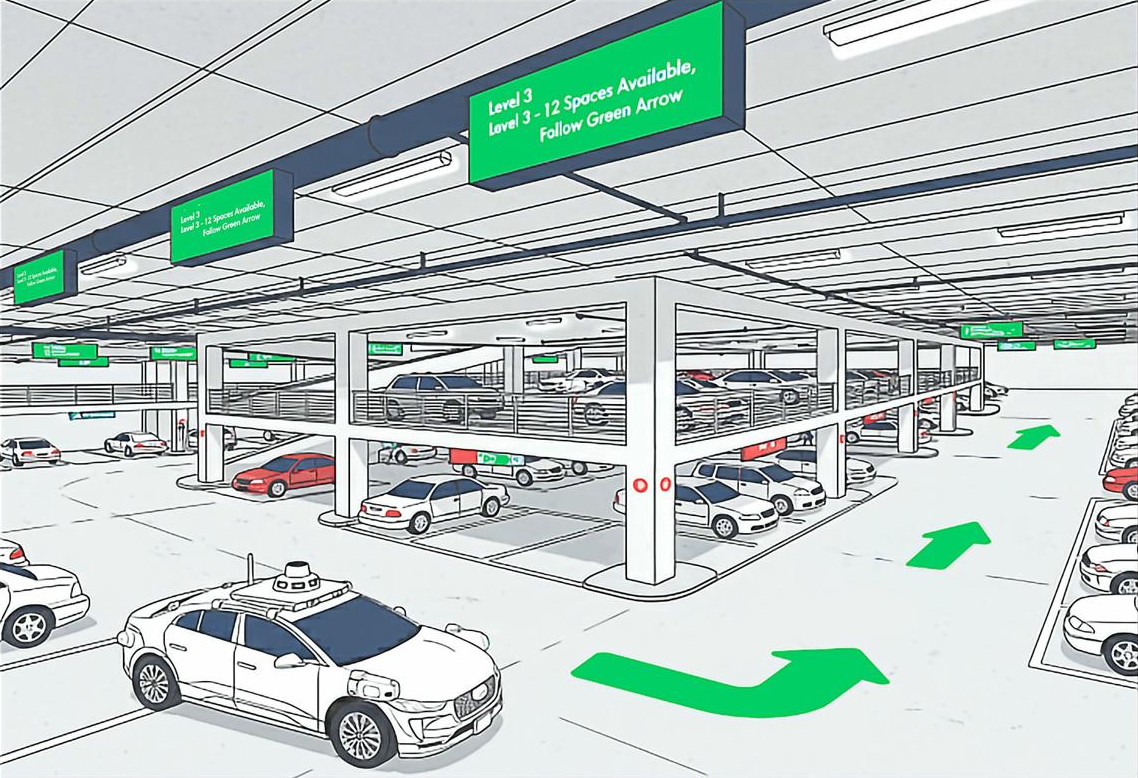
What automation takes, what it leaves, and the career ladder that follows.
17
AI Removes Tasks Before It Removes the Business
Artificial intelligence gets talked about like it’s going to arrive in one dramatic wave. In parking, it looks more like a continuous, unglamorous substitution of tasks, one at a time, not all at once.
The Bureau of Labor Statistics (BLS) is direct about this: automated parking machines are a capital/labor substitution factor cutting demand for some attendant tasks, and automated license plate readers are expected to shrink the employment share of parking-enforcement workers. And yet its 2024 to 2034 projections still show parking-attendant employment climbing from about 135,700 to 139,800, a 3% increase. 28, 29
SOURCE: U.S. BUREAU OF LABOR STATISTICS, ENDNOTES 28 AND 29
That apparent contradiction is actually useful to sit with: technology can shrink the labor intensity of any single transaction while total parking activity, valet operations, events, customer service, and ordinary replacement hiring still keep a meaningful workforce employed.
In practice, the tasks under the most automation pressure are the repetitive, rules-based, high-volume ones: collecting a ticket, taking a routine payment, checking every plate by hand, writing up a standard report, answering the same basic customer question for the ten-thousandth time.
The less standardized the problem, the more human capability is worth. A major event, an emergency closure, an angry customer, an inaccessible stall, a failed camera, a blocked lane, a special permit request, a VIP movement, a construction conflict, a policy dispute, a genuinely complex client decision, all of it still needs judgment. AI can hand someone the information. A person still has to decide.
18
What Will Remain, and Grow More Valuable
| Capability that grows in value | What the work looks like |
|---|---|
| Revenue management and pricing | Forecast demand, manage rates and inventory, evaluate events, test pricing, and understand channel economics. |
| Systems integration and technology operations | Understand PARCS, LPR, payments, APIs, networks, credentials, validations, and troubleshooting across vendors. |
| Data analytics and revenue assurance | Reconcile transactions, identify leakage, measure occupancy, build dashboards, validate KPIs, and translate data into operating decisions. |
| Cybersecurity, privacy, and data governance | Manage payment security, plate data, retention, access controls, vendor risk, and incident response. |
| Customer experience and exception management | Handle disputes, accessibility needs, complex validations, equipment failures, service recovery, and high-touch environments. |
| Field technology and asset reliability | Install, maintain, calibrate, and repair cameras, sensors, communications, gates, chargers, signage, and connected infrastructure. |
| Commercial structuring and asset underwriting | Evaluate revenue potential, technology CapEx, payback, lease risk, revenue share, term, and portfolio economics. |
| Client strategy and stakeholder leadership | Translate technology into owner outcomes, negotiate tradeoffs, manage public/private stakeholders, and preserve trust. |
| Mobility and curb integration | Manage EV charging, pickup/drop-off, rideshare, loading, events, fleet staging, micromobility, and future vehicle-access uses. |
AUTHOR FRAMEWORK, SECTIONS 14 AND 15
IPMI’s 2025 PTMP competency framework captures how broad this profession has already become, it covers parking-management technology, LPR, payment processing, PCI compliance, cybersecurity, data analytics, predictive parking algorithms, demand-based pricing, implementation, auditing, and emerging technologies. 30
The market is already hiring for these capabilities, not just theorizing about them. Reimagined Parking’s Revenue Management Analyst role calls for analyzing demand, occupancy, transactions, events, pricing, dashboards, and inventory. Ocra describes revenue-optimization roles that blend parking knowledge with pricing, analytics, client communication, and platform expertise. 17, 32
19
The New Career Ladder
The industry should expect familiar job titles to change, not vanish. A plausible transition looks like this:
| Traditional role | Emerging role | Higher-value knowledge |
|---|---|---|
| Cashier / booth attendant | Remote customer-experience specialist | Multi-site support, de-escalation, digital payments, exception handling |
| Patrol attendant | LPR / compliance operations specialist | Camera systems, evidence review, policy, appeals, data quality |
| Garage manager | Portfolio operations manager | Remote monitoring, KPIs, vendor coordination, field response |
| Revenue clerk | Revenue assurance / data analyst | Dashboards, anomaly detection, reconciliation, transaction systems |
| Rate-setting manager | Revenue management analyst | Forecasting, occupancy, dynamic pricing, distribution channels |
| Equipment technician | Connected-infrastructure technician | Networks, cameras, IoT, EV charging, software diagnostics |
| Sales executive | Structured-solutions / asset-underwriting lead | ROI, CapEx, risk allocation, revenue share, contract economics |
| Regional executive | Mobility asset executive | P&L, technology roadmap, customer experience, data governance, partnerships |
This transition raises the bar on what a parking professional needs to know. A manager doesn’t need to become a software engineer. But they do need to understand integrations, data flows, payment risk, cybersecurity, AI outputs, pricing logic, and contract economics well enough to push back on a vendor and make a decision they can stand behind.
The foundation of parking management was never the booth. It is disciplined control of a complex physical asset.
Frank Ching
20
The Foundation That Cannot Be Automated Away
As parking gets more digital, the industry runs a real risk of undervaluing the operating knowledge that made its technology worth anything in the first place. The foundation of parking management was never the booth. It’s disciplined control of a complex physical asset.
- Operational judgment. traffic flow, queues, event surges, staffing, safety, circulation, and facility limitations.
- Revenue integrity. knowing where leakage occurs, how validations work, how payment behavior changes, and when a dashboard does not reconcile to the real world.
- Hospitality and service recovery. managing the human moments when an automated system fails or policy creates an unreasonable customer outcome.
- Local market knowledge. demand generators, competitors, neighborhood patterns, tenants, municipal rules, and event calendars.
- Asset stewardship. equipment, cleanliness, signage, lighting, accessibility, circulation, and the physical customer experience.
- Policy and compliance. enforcement fairness, privacy, ADA, payment-card obligations, records, security, and public accountability.
- Client trust. explaining tradeoffs, owning mistakes, adapting to property goals, and remaining accountable when multiple vendors are involved.
Technology can make every one of these functions more efficient. It can’t make them unnecessary. The more automated the routine transaction becomes, the more the operator’s remaining human labor should be concentrated right here, on the things that actually require a person.
Part Five
What To Do About It
How owners, operators, and public agencies should act on all of this.
21
What Owners Should Procure Differently
Procurement practices built around staffing plans and management fees can end up preserving an obsolete operating model without anyone intending it. Owners and public agencies should be specifying outcomes and guardrails now, not dictating every legacy input the way an RFP always has.
- Total lifecycle economics, not simply management fee.
- Owner CapEx versus operator-funded technology and the cost of capital embedded in the commercial structure.
- Data ownership, portability, retention, privacy, and API access.
- Cybersecurity, PCI responsibility, incident response, and access controls.
- Uptime, redundancy, field-service response, and technology-refresh obligations.
- Revenue baseline, pricing authority, revenue-management methodology, and measurable NOI improvement.
- Customer response times, escalation, refunds, disputes, accessibility, and human service recovery.
- Integration responsibilities across PARCS, LPR, mobile payment, reservations, validations, enforcement, EV charging, and building systems.
- Equipment ownership and transition assistance at termination.
- Workforce transition and retraining: which tasks are automated, which roles remain on site, and how service quality will be protected.
None of this means labor becomes irrelevant. A hospital, airport, university, major event, or complex mixed-use environment may still need substantial on-site presence, and that’s fine. The question is why each role is necessary and what outcome it actually produces, not whether last decade’s staffing table can just be copied forward unchanged.
22
A Practitioner’s Position
The procurement checklist in the previous chapter applies to any owner writing an RFP, public or private. But it assumes the decision to transition has already been made. The harder question sits one level up: whether you should move now, and how fast, and that has less to do with procurement mechanics and more to do with what kind of owner you are. This chapter is a position on that prior question, my position, drawn from having sat on both sides of this business: as an operator, and as an owner representing a municipality, a countywide transit agency, and a university, together responsible for tens of thousands of parking spaces.
The honest answer is that the right move depends heavily on what kind of owner you are. Public agencies and private asset owners are not starting from the same place, and I would not tell them to move at the same pace.
Public sector owners: the path is already clear
If you are a public sector owner, a city, a county, a transit agency, a public university, an airport authority, my recommendation is straightforward: don’t look back.
Public agencies already carry most of what a transition to a technology-led, low-labor operating model actually requires. You typically already have enforcement authority established through ordinance or police power, not a private towing contract a driver can challenge in small-claims court. You typically already have a citation appeals or administrative adjudication process, because due process has been a legal requirement of public enforcement for decades. Your governing body has likely already adopted policies, parking policy, revenue policy, in many cases technology and data policy, that can be amended to support the transition rather than invented from nothing. And many public agencies already operate under a public-records or data-privacy framework that was written broadly enough to cover exactly this kind of data collection.
That combination is rare, and it is valuable. It means a public agency is genuinely equipped to move away from heavy labor cost, go gateless, go self-served, capture the full data set a modern platform can generate, and use AI to manage rates and maximize revenue, not as an experiment, but as a considered operating decision. The legal authority to enforce it and the due-process mechanism to make it fair are very likely already on the books.
Move deliberately toward gateless, LPR-based, self-service access, the enforcement mechanism to support it almost certainly already exists in your code or ordinance.
Use dynamic, AI-informed pricing to manage demand and maximize revenue, not just to justify a headcount reduction.
Capture and retain the full data set your platform produces; it is one of the few genuinely new assets this transition creates for a public agency.
Update, rather than reinvent, your existing appeals, records-retention, and data-privacy policies to explicitly cover the new technology.
Redirect labor savings into the higher-value roles this paper describes throughout, revenue analysts, enforcement policy, technology administration, and customer service recovery, rather than treating the savings purely as headcount reduction.
Private sector owners: prove it before you commit
Private asset owners, hotels, commercial office buildings, shopping malls, standalone surface lots, are in a fundamentally different position, and I would give a very different recommendation: don’t skip the study.
A private owner generally does not have inherent enforcement authority. What you have instead is a contractual relationship with the driver, enforced through signage, private booting and towing statutes that vary widely by state and even by city, and third-party citation processing that carries none of the legal weight of a public agency’s police power. Before adopting the same playbook a municipality or a university can use safely, I would commission an objective study, not a vendor’s pitch deck, that answers a specific set of questions honestly.
- Regulatory readiness. confirm whether your state law and local ordinances actually support gateless enforcement, LPR-based citation issuance, and private booting or towing the way your vendor assumes they do. This is the one item that can invalidate the rest of the plan, and it varies enormously by jurisdiction.
- Revenue risk tolerance. model the revenue you could plausibly lose during a transition period, and decide in advance how much of that you can absorb.
- Risk-weighted assessment. weight each identified risk, legal, reputational, cybersecurity, and revenue, by likelihood and cost, not just by which risk is loudest in the room.
- Equipment and technology ROI. get an independent return-on-investment analysis for the specific equipment and software being proposed, not the vendor’s own projection.
- Long-term labor savings. model the multi-year labor savings against the technology cost, financing cost, and ongoing vendor fees, not just the year-one numbers.
- Operator partnership on capital. consider asking your operator to co-invest in the upfront technology cost. A partner with capital at risk is a partner genuinely aligned with the outcome.
- Appeals process. decide, before you deploy, how a driver disputes a charge, and make sure that process is fair, documented, and fast enough that it doesn’t become a customer-service or legal liability on its own.
- Customer interaction. decide what level of live customer support, phone, chat, or on-site, your customer base actually expects, and build that into the cost model rather than treating it as an afterthought.
- Privacy and cybersecurity. have counsel review what data you will be collecting, how long you will retain it, who can access it, and what your breach-notification obligations are under your state’s law.
- Data monetization. ask directly whether your operator or technology vendor is also in the data-mining or data-resale business, and if so, negotiate whether you, the asset owner, receive a share of that revenue, or whether you are instead absorbing legal exposure for data you don’t control and don’t profit from.
None of this is a reason to avoid the transition described in this paper. It is a reason to earn it. The goal for a private owner is not to move first; it is to move once, with every one of these questions answered, so the technology decision never becomes the subject of the next class-action complaint.
The Owner’s Position
Public sector owners already hold the enforcement authority, the appeals process, and the policy foundation this transition requires, the responsible move is to proceed. Private sector owners hold none of that by default, and should commission an objective study, covering law, risk, ROI, partnership structure, and data liability, before they do.
The distinction matters because it is easy to read the rest of this paper as a single playbook. It isn’t. Public agencies generally have the authority, the due-process infrastructure, and the policy foundation to adopt this operating model quickly and confidently. Private owners generally do not have those things built in by default, and should treat the transition as a capital and legal decision first, and a technology decision second.
The goal for a private owner is not to move first. It is to move once.
Frank Ching
23
The Mobility Lens
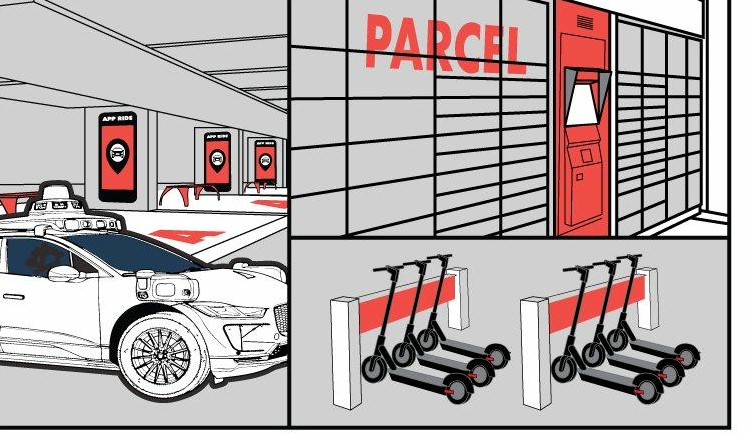
Everything in this paper up to this point has treated the parking facility as the unit of analysis: its labor, its technology, its revenue model, its ownership. That’s necessary, but it’s no longer sufficient. A garage or a surface lot is not only a parking asset. It is a node in a mobility network, whether the owner ever planned it that way or not, and the parking management industry needs to evaluate, design, and staff for that reality rather than treat it as an optional add-on.
What a mobility hub actually is
Regional planning agencies already have a name for this: a mobility hub. SANDAG defines one simply, as a place where people can connect to multiple types of transportation (transit, bike infrastructure, shuttles), and its regional features catalog breaks that down into practical components: transit waiting areas with real-time travel information, bike lanes and bike parking, dedicated transit infrastructure, access to rideshare and microtransit, smart parking technology, and ground-floor commercial amenities. 35
None of this is exotic, and none of it requires demolishing anything. Most of it already exists in pieces at a typical mid-size garage or surface lot: a bus stop out front, an underused loading zone, a curb apron where rideshare already idles informally. What’s usually missing isn’t the physical capacity. It’s the deliberate design, the revenue model, and the professional judgment that turns those scattered pieces into a coordinated asset instead of an accident of geography.
An industry that already renamed itself
The profession has, in a sense, already made this call. The International Parking & Mobility Institute, the same body that publishes the PTMP competency framework cited earlier in this paper, did not stay the International Parking Institute. Its own mission statement describes its purpose as advancing “the parking and mobility profession,” and its materials consistently treat “parking, transportation, and mobility” as one connected field rather than three separate ones. 36 The name change happened years ago. Day-to-day practice (procurement habits, staffing models, the KPIs a facility gets judged on) has not always caught up with it.
This isn’t a hypothetical concern for the industry’s own trade press. Coverage of the National Parking Association’s 2026 convention described Metropolis CEO Alex Israel using his keynote to argue that parking’s physical infrastructure should be repurposed into a durable hub for future mobility, and noted that curb management and cross-platform data integration were on prominent display on the show floor, while dedicated EV-charging vendors were conspicuously thin on the ground. 37 That gap says something: the industry is more comfortable talking about mobility hubs than it is actually building the EV and micromobility infrastructure that would make one real.
A related, more structural version of this argument is one the author has made elsewhere in the trade press: that a parking garage evaluated purely as a place to store cars is undervaluing itself, and that activating underused ground-floor frontage for micromobility docking or last-mile delivery staging is one of the more concrete ways an owner can improve both neighborhood service and the facility’s own financial performance. 38 That argument, and the mobility-hub framework behind it, is developed further in the author’s related analysis here at Parkonomics.
What this means for asset owners and operators
For an asset owner, this is not a call to add amenities for their own sake. It is a call to evaluate every major facility against a wider set of questions than turnover and revenue per space:
- Transit adjacency. Is there a bus stop, rail platform, or shuttle connection within reasonable walking distance, and does the facility’s design help or hinder that connection?
- Curb and loading management. Is the curb frontage actively managed for rideshare pickup and drop-off, delivery, and ADA access, or is it left to sort itself out informally?
- Micromobility capacity. Is there secure bike parking or docking, and is there a ground-floor location that could support a bike-share or scooter-share station?
- EV readiness. Does the facility have, or have a credible plan for, EV charging capacity that matches actual and projected demand, rather than a handful of demonstration stalls?
- Last-mile and logistics staging. Could underused space support delivery lockers, cloud-kitchen staging, or fleet and rideshare queuing in a way that adds revenue without degrading the parking function?
- Data and wayfinding. Does the facility surface real-time occupancy, transit, and multimodal information to the people using it, not just to the operator?
For public agencies, this connects directly to the procurement checklist in Chapter 21: mobility-hub components belong in the RFP and the capital plan, not treated as a separate grant-funded afterthought. Coordinating with the regional MPO or transit agency on adopted mobility-hub design standards is usually the fastest way to avoid reinventing this work facility by facility.
For the industry itself, this means the PTMP-level competencies IPMI already recognizes need to become standard practice, not a specialty credential a handful of people hold. Revenue managers, facility planners, and operators alike should be conversant in curb management and multimodal design, the same way this paper has already argued they need to be conversant in payments, data, and cybersecurity.
The Mobility Lens
A parking facility evaluated only on turnover and revenue per space is being undervalued. The same asset, evaluated as a mobility hub, with transit, curb, micromobility, EV charging, and data all under one roof, is a materially different, and usually more valuable, piece of infrastructure. The industry has already renamed itself around this idea. It’s time operating practice caught up.
That’s a real expansion of what the parking professional needs to know, on top of everything else this paper has already argued for. It is also, not coincidentally, exactly the kind of capability the next chapter describes.
24
What Operators Must Become
The parking operator of the next decade will need capabilities that used to be spread across several different businesses entirely: facility operations, software, payment processing, revenue management, field service, customer support, data analytics, and financial underwriting.
Not every operator needs to build all of this internally. An open, well-integrated ecosystem can be more resilient than a closed proprietary stack. But every serious operator has to own the outcome. “That’s the payment vendor’s problem” or “that’s on the LPR vendor” isn’t good enough anymore when something breaks.
That raises the minimum bar for competence across the board. Operators need a real grasp of technology architecture, contract structure, data rights, cybersecurity, and return on invested capital. They also need to train frontline employees to work inside an automated environment, and build career paths that actually move people from physical transactions into higher-value technical and analytical roles.
The most successful firms probably won’t be the ones with the largest historical labor force. They’ll be the ones that combine real local operating execution with scalable technology and disciplined economics, all three, not just one or two.
25
The 2030 Parking Proposal
A useful way to see the change is to picture what the winning proposal itself will actually say.
The traditional proposal leaned on attendant counts, supervisor hours, payroll burden, insurance, uniforms, management fee, and equipment reimbursement.
The 2030 proposal will more likely lead with a technology conversion plan, operator-funded capital, revenue baseline, projected NOI improvement, automated payment adoption, LPR accuracy, platform uptime, dynamic-pricing governance, transaction economics, data ownership, API access, cybersecurity controls, customer response time, field-service coverage, technology refresh, and a workforce plan built around exceptions rather than routine transactions.
The Commercial Shift
The old operator sold hours. The next operator sells performance.
26
The Parking Operator of 2035
By 2035, the strongest parking companies will probably look like hybrid operating platforms. They’ll still employ parking professionals, plenty of them, but a growing share of enterprise value will come from systems, data, payment flows, portfolio intelligence, customer networks, and the ability to deploy capital efficiently.
A future operator might earn money simultaneously from physical operations, software licensing, transaction activity, payment processing, reservation distribution, EV charging, enforcement services, portfolio revenue management, and a performance incentive tied to net operating income. The contract will look less like a staffing agreement and more like a structured commercial partnership.
The company that wins here won’t necessarily own every piece of the technology. Open architecture may end up worth more than proprietary lock-in. But the operator will still be expected to own the result, whoever built the parts.
The physical facility itself will keep expanding beyond parking, too. EV charging, rideshare, delivery, fleets, logistics, events, curb activity, all of it can be managed as part of the same asset. But Reimagined Parking’s history is a real caution here: adjacent uses have to complement the core economics and service requirements of the parking operation, not distract from them. 13, 15
27
Strategic Implications for the Industry
| Stakeholder | Strategic implication |
|---|---|
| For traditional operators | Protect operating culture, but stop treating technology as a reimbursable accessory. Build or partner for data, revenue management, integrations, AI, payments, and capital deployment. |
| For technology companies | Parking is not a pure software environment. Build operational capability, field service, customer escalation, and real-estate/mobility economics. |
| For property owners | Compare total economics, data rights, interoperability, and transition risk. A low management fee may be expensive if it requires separate capital and fragmented vendors. |
| For public agencies | Procure transparency, accessibility, cybersecurity, data governance, open integration, and measurable public outcomes, not proprietary dependency. |
| For the workforce | Move from transaction execution toward exception management, revenue, systems, analytics, cybersecurity, field technology, and client leadership. |
| For investors | Parking-company value increasingly depends on recurring economics, technology architecture, consumer/network reach, client retention, data, and operating performance at scale. |
28
Conclusion
Parking will remain a physical service tied to real estate, transportation, access, and human behavior. Cars will still show up. People will still need help. Facilities will still need maintenance, safety, policy, customer service, and judgment. Complex events and environments will still need experienced operators who know what they’re doing.
What’s actually going to disappear first isn’t the parking business. It’s the assumption that every parking transaction requires human labor, that technology is just an owner-funded accessory, and that the operator’s primary value is reselling payroll and insurance.
What remains, and becomes more valuable, is the ability to manage the parking asset like a business: understand demand, deploy capital wisely, integrate technology, protect data, price intelligently, operate reliably, serve customers well, manage exceptions, and produce measurable financial and mobility outcomes.
The company stories in this paper all point the same direction. SP+ and Metropolis show technology buying operating scale, not replacing its value. Reimagined Parking shows what happens when a company loses sight of parking fundamentals while chasing a bigger technology thesis. LAZ shows a traditional operator building technology while holding onto its culture. Propark shows how consolidation can retain regional operating DNA instead of erasing it. AirGarage shows how digital-native economics put real pressure on incumbents to tie their fees to performance.
The future parking professional will need a broader identity than the job ever asked for before. The best leaders will be part operator, part technologist, part revenue manager, part asset manager, and part customer strategist, all at once, not in sequence.
Parking management isn’t becoming less sophisticated because the booth is disappearing. It’s becoming more sophisticated, because the business is moving from the booth to the platform.
The future of parking is not laborless. Human labor will concentrate where judgment, trust, service, and operating knowledge create the greatest value.
Frank Ching, author’s thesis
Endnotes & Bibliography
- SP Plus Corporation. Form 10-K for year ended December 31, 2016. “Industry Operating Arrangements.” U.S. Securities and Exchange Commission. https://www.sec.gov/Archives/edgar/data/1059262/000105926217000011/sp1231201610-k.htm
- SP Plus Corporation. 2013 Form 10-K. History of Standard Parking, Central Parking acquisition, and SP Plus name change. U.S. Securities and Exchange Commission. https://www.sec.gov/Archives/edgar/data/1059262/000104746914002333/a2217978z10-k.htm
- Standard Parking Corporation / Central Parking merger investor materials, 2012. Scale, integration, and technology-development rationale. U.S. Securities and Exchange Commission. https://www.sec.gov/Archives/edgar/data/1059262/000119312512089665/d307115dex996.htm
- SP Plus Corporation. 2023 Form 10-K. Descriptions of Sphere, AeroParker, Parking.com, revenue management, and technology-driven mobility services. https://www.sec.gov/Archives/edgar/data/1059262/000095017024021554/sp-20231231.htm
- Metropolis. “Metropolis Technologies, Inc. to Acquire SP Plus Corporation for $1.5 Billion.” October 5, 2023. https://www.metropolis.io/newsroom/metropolis-to-acquire-sp-plus
- Metropolis. “Metropolis Closes $1.8 Billion Financing and Completes Transformational Take-Private of SP Plus Corporation.” May 16, 2024. https://www.metropolis.io/newsroom/metropolis-closes-acquisition-of-sp-plus
- SP Plus. “Acquisition Announcement” and client Q&A regarding integration of Sphere Commerce with Metropolis. https://www2.spplus.com/acquisition-announcement/ ; https://www.spplus.com/customer-questions-answers/
- Metropolis. Parking and pricing materials, accessed August 27, 2026. https://www.metropolis.io/business/parking ; https://www.metropolis.io/pricing
- Metropolis. “Our Operations,” accessed August 27, 2026. https://www.metropolis.io/operations
- Impark. “About Impark,” company history, accessed August 27, 2026. https://impark.com/about-impark/
- Impark. “Impark Acquires U.S.-wide Parking Company; Republic Parking.” April 8, 2016. PR Newswire. https://www.prnewswire.com/news-releases/impark-acquires-us-wide-parking-company-republic-parking-300248764.html
- Impark / REEF company brochure, 2019, describing Impark’s acquisition by REEF Technology (formerly ParkJockey) and creation of REEF Parking. https://impark.com/wp-content/uploads/2019/09/IM-REEF-HC-Brochure-Digital.pdf
- Jay Landers. “Revitalizing Reimagined Parking.” Parking Today. March 31, 2025. https://parkingtoday.com/segments/private_operator/revitalizing-reimagined-parking/
- Reimagined Parking. “Reimagined Parking Completes Private Capital Transaction to Strengthen its Position as a Leader in the Parking Solutions Industry.” January 31, 2025. https://reimaginedparking.com/reimagined-parking-completes-private-capital-transaction-to-strengthen-its-position-as-a-leader-in-the-parking-solutions-industry/
- Reimagined Parking. “Our Story” and current company profile, accessed August 27, 2026. https://reimaginedparking.com/our-story/
- Reimagined Parking. “Portfolio Management,” accessed August 27, 2026. https://reimaginedparking.com/portfolio-management/
- Reimagined Parking Careers. “Revenue Management Analyst.” Current posting, accessed August 27, 2026. https://reimaginedcareers.pinpointhq.com/en/postings/8c8fd586-d57b-4ab2-9532-9d706ca06a55
- LAZ Parking. “History,” accessed August 27, 2026. https://www.lazparking.com/our-company/about/history
- LAZ Parking. “CEO Al LAZ Eyes Digital Transformation of his Parking Empire.” March 22, 2021. https://www.lazparking.com/our-company/about/news/2021/03/23/ceo-al-laz-eyes-digital-transformation-of-his-parking-empire
- LAZ Parking. “LAZ Parking Acquires Majority Stake in Indigo Park Canada.” July 1, 2025. https://www.lazparking.com/our-company/about/news/2025/07/01/laz-parking-acquires-majority-stake-in-indigo-park-canada
- LAZ Technology. Current product overview, including JustGo AI-powered LPR, digital payment, business intelligence, and customer-care tools. https://tech.lazparking.com/ ; https://tech.lazparking.com/products/
- LAZ Technology. “Hardware as a Service,” accessed August 27, 2026. https://tech.lazparking.com/products/hardware-as-a-service/
- Propark Mobility. “Acquisitions with Propark Mobility,” accessed August 27, 2026. https://www.propark.com/solutions/acquisitions/
- Propark Mobility. “Propark Mobility Announces Acquisition of K-7 Parking Company.” April 8, 2026. https://www.propark.com/2026/04/08/propark-mobility-announces-acquisition-of-k-7-parking-company/
- AirGarage. “Parking Management Solutions for Property Owners,” accessed August 27, 2026. https://www.airgarage.com/
- AirGarage. “Parking Management FAQs,” accessed August 27, 2026. https://www.airgarage.com/faq
- AGC Partners. “Parking Technology Q1 2026 Market Update.” Investment-market analysis of platform consolidation and AI/automation. https://www.agcpartners.com/insights/agcs-parking-technology-q1-2026-market-update
- U.S. Bureau of Labor Statistics. “Factors Affecting Occupational Utilization,” projected 2024-34. Parking attendants and parking enforcement workers. https://www.bls.gov/emp/tables/factors-affecting-occupational-utilization.htm
- U.S. Bureau of Labor Statistics. “Occupational Projections and Worker Characteristics,” 2024-34. Parking attendants. https://www.bls.gov/emp/tables/occupational-projections-and-characteristics.htm
- International Parking & Mobility Institute. PTMP Certification Program Candidate Handbook, Version 01, March 2025. Technology, cybersecurity, analytics, pricing, procurement, and emerging-technology competencies. https://www.parking-mobility.org/wp-content/uploads/2024/12/2025-ptmp-candidate-handbook.pdf
- International Parking & Mobility Institute / Parking & Mobility. “Ask the Experts: Innovative Funding.” Discussion of revenue share, pay-as-you-grow pricing, dynamic pricing, and e-commerce. https://parking-mobility-magazine.org/ask-the-experts/innovative-funding/
- Ocra. “Revenue Optimization Manager,” current role description, accessed August 2026. https://jobs.ashbyhq.com/ocra/852e6fcf-15cc-4927-804e-33bb0400f328
- Parking BOXX. “Parking BOXX Releases Calculator to Compare Parking Management Pricing Models.” July 30, 2026. Compares gross-revenue share, per-transaction pricing, and equipment ownership. https://parkingboxx.com/pr/parking-boxx-releases-parking-management-cost-calculator
- Reimagined Parking. “Reimagined Parking Caps a Strong 2025 with Strategic Growth, Organizational Realignment, and Enhanced Client Support.” March 25, 2026. https://reimaginedparking.com/reimagined-parking-caps-a-strong-2025-with-strategic-growth-organizational-realignment-and-enhanced-client-support/
- SANDAG. “Mobility Hubs and Parking Management.” Accessed September 24, 2026. https://www.sandag.org/projects-and-programs/innovative-mobility/mobility-hubs-and-parking-management
- International Parking & Mobility Institute. “About.” Accessed September 24, 2026. https://www.parking-mobility.org/about/
- Kiosk Industry. “NPA 2026: Parking Infrastructure Evolves to Tech Hubs, 10 Takeaways.” September 21, 2026. https://kioskindustry.org/npa-2026-parking-infrastructure-evolves-to-tech-hubs-10-takeaways/
- Ching, Frank. “From Storage to Smart City Infrastructure.” Parking Today. June 25, 2026. https://parkingtoday.com/segments/airport/from-storage-to-smart-city-infrastructure/
Source Interpretation and Citation Policy
Primary company websites, press releases, and SEC filings are used to establish corporate history, transaction events, stated strategy, current product offerings, and business-model positioning.
Company-reported performance figures and vendor claims are identified as company claims and should not be read as independently verified results.
Parking Today is used as an independent trade-industry source for the Reimagined Parking turnaround narrative. BLS and IPMI are used for workforce and professional-competency evidence.
AGC Partners is used for directional investment-market analysis. Its market-size, analog-adoption, revenue-uplift, and deal-count figures are not treated as an independently audited industry census.
Short quotations. The paper does not attribute direct quotations to named company executives or organizations, since exact wording cannot be independently verified from secondary reporting. Where a source describes what a company or executive said, that is paraphrased and cited rather than quoted verbatim. The one exception is the author’s own framework statements, labeled as such.

 F
F