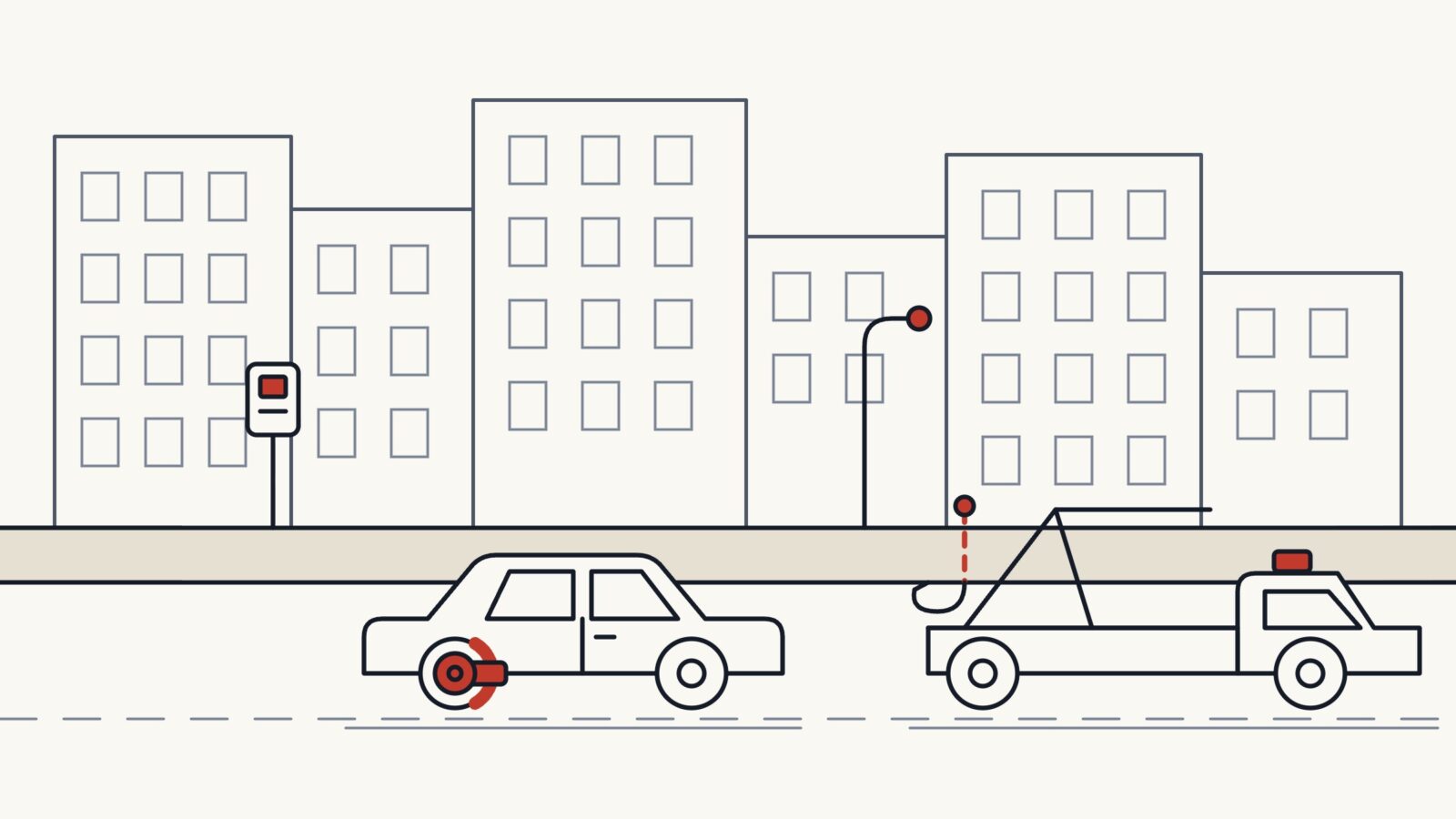
Two hundred seventy-three dollars. That is what Chicago received when it sold Ryan O’Donnell’s car for scrap. He owed about $524 on three parking tickets: two expired meters and one time-restricted space. The city booted the car, towed it, stacked boot, tow and storage fees on top of the original debt, and then sold it. O’Donnell got nothing back, and under the city’s code he was not entitled to anything.1
On Monday, October 19, the U.S. Supreme Court declined to hear his case.2 That sounds like the end of the story. It is closer to the beginning. In a written statement respecting the denial, Justice Sonia Sotomayor, joined by Justice Neil Gorsuch, said she has “serious concerns” about how the lower courts upheld the program, and she laid out a test that reaches well beyond Chicago.1 When two justices who often reach different conclusions sign the same warning, the parking industry should read it closely.
The question the statement asks is one every enforcement program should be able to answer: what is this program actually for?
What the case was about
Under Chicago’s municipal code, a vehicle owner with as few as two parking tickets unpaid for more than a year can have a vehicle booted, impounded and eventually disposed of. The city has no obligation to pay compensation, to credit the vehicle’s value against the ticket debt, or to return any surplus if the car sells for more than is owed.1
O’Donnell was one of two plaintiffs. The other, Michael Goree, had no tickets at all. A co-signer on his car loan had about $560 in unpaid tickets on a different vehicle. Under the code, the city could reach any vehicle connected to the debtor, so it booted and towed Goree’s Chevrolet and eventually turned it over to the lienholder. Goree was not compensated either.1
The two filed a class action arguing that the program violates the Fifth Amendment’s Takings Clause, which bars the government from taking private property for public use without just compensation. A federal district court dismissed the suit. In December 2025, the Seventh Circuit affirmed, holding that booting, towing, impounding and disposing of vehicles is an exercise of the city’s police power to enforce its traffic code, and therefore not a taking at all.3 The Supreme Court’s denial lets that ruling stand. A denial of review is not a decision on the merits, and the statement makes clear why this one was denied: the question needs more time in the lower courts, and a facial challenge to the whole ordinance was not the cleanest vehicle for answering it.1
The line the justices drew
The legal fight turns on two Supreme Court precedents, and the parking industry needs to understand both.
The first is Bennis v. Michigan (1996), which held that the government may seize property used in breaking the law without compensating the owner.5 The Seventh Circuit treated Chicago’s program as a Bennis case: the car is the instrument of the violation, so it can be taken.
The second is Tyler v. Hennepin County (2023). A Minnesota county sold a woman’s condo for $40,000 to cover about $15,000 in property tax debt and kept the difference. A unanimous Court called it a classic taking.4 Government can collect a debt by seizing and selling property, but it cannot keep more than it is owed.
Justice Sotomayor’s point is that Chicago looks more like Tyler than Bennis, for two reasons. First, the city does not limit impoundment to the vehicle involved in the violation. It can take any vehicle belonging to the debtor, as it did with Goree. Second, once a car is impounded, losing it is a consequence of failing to pay, not of the original parking violation. Those features, she wrote, strongly suggest the purpose of the impoundment is to collect a debt rather than to enforce public safety laws. If that is right, the city’s failure to compensate owners would likely violate the Takings Clause. She added that disposing of cars at scrap value or surrendering them to lienholders, rather than selling them at a fair auction, only deepens the problem.1 That last point leans on Pung v. Isabella County, decided this June, which held that just compensation after a tax sale is measured by the sale price, but only when the sale is fairly conducted.6
Strip away the doctrine and the test is one any parking professional already uses: is this tool managing the curb, or is it managing a receivable?
Is this tool managing the curb, or is it managing a receivable?
Andrew Sachs
Why this reaches past Chicago
Chicago is the case in front of the Court, but the structure it describes is common. Many cities run scofflaw programs that tie booting and towing to accumulated ticket debt. Many of those programs are triggered by license plate recognition sweeps that look up the registered owner’s balance, not the behavior of the car parked at the curb. Towing and storage are frequently contracted out. Disposal often runs through scrap or lien sales. Revenue from all of it flows into general funds. Justice Sotomayor cited an estimate that Chicago’s ticketing system generated about $264 million in 2016, roughly 7 percent of the city’s operating budget.17
The legal question the statement highlights is also unsettled nationally. The federal circuits are split on whether, and when, government action taken under the police power is immune from takings claims. Some courts treat any police power action as categorically exempt. Others recognize only a narrower public safety or necessity exception, or exclude property damaged during a lawful search or arrest. The Ninth Circuit, which covers California, is on the list of courts that have weighed in. Justice Sotomayor urged lower courts to define any exemption carefully and narrowly and to explain where it comes from.1 That is an invitation for the next plaintiff, and Chicago itself faces other challenges to its impound program.9
For the industry, the exposure sits in three places.
Cities and parking authorities. A program whose remedies follow the person rather than the vehicle, and whose end state is a forfeiture with no accounting of value, now carries a named constitutional theory and two votes on the Court behind it.
Vendors and contractors. Boot providers, towing operators, impound lot managers and LPR enforcement vendors all build products around these programs. If courts start drawing the line where the statement suggests, contracts that pay on volume, or that let the contractor keep disposal proceeds, will be the first things reviewed.
The policy argument for enforcement itself. This is the part that matters most. Good enforcement is what makes priced parking work. Meters, time limits and permit zones only manage demand if they are enforced. When the most visible face of enforcement is a car sold for scrap over $524 in tickets, it erodes public trust in the tools that keep curbs open. Programs that look like collections operations make the case for curb management harder, not easier.
A practitioner playbook
None of this requires waiting for the Court. Cities that want enforcement programs that hold up, legally and politically, can start with five moves.
1. Tie the remedy to the vehicle that broke the rule. The single feature Justice Sotomayor found hardest to square with the police power rationale was reaching a car that committed no violation. Plate-level or vehicle-level debt, rather than owner-level debt, keeps enforcement connected to the curb. It also reduces the damage when the plate itself is wrong.
2. Account for value and return the surplus. If a vehicle is sold, credit its value against the debt and return anything left over. After Tyler and Pung, the question is not whether a surplus belongs to the owner but whether the sale that set its value was fair. Scrap pricing and lienholder handoffs are the weakest link.
3. Separate the enforcement ledger from the collections ledger. Measure enforcement by compliance, turnover and occupancy, the outcomes a curb program exists to produce. Measure collections separately. If boot and impound revenue is a budget line that someone is expected to hit, the program has already answered the court’s question for it.
4. Build release paths before the tow. Chicago has already moved in this direction, adding an extra day after a boot to pay or enroll in a payment plan as part of reforms the City Council passed 49 to 1 in 2019.8 Payment plans offered before impoundment, self-release boots that unlock on payment, and clear digital notice all reduce the number of cars that reach disposal at all.
5. Audit the contracts. Review how towing, storage and disposal vendors are paid, who keeps sale proceeds, and how sale prices are set. Storage fees that accrue daily can outrun the value of the vehicle within weeks, which turns a parking debt into a forfeiture by arithmetic.
What we still do not know
The Supreme Court has not decided whether Chicago’s program is constitutional, and the Seventh Circuit’s ruling remains the law in Illinois, Indiana and Wisconsin. We do not know which case the Court will eventually take to resolve the circuit split, or whether it will be about parking at all; the same question arises in police damage to property, public health orders and civil forfeiture. We do not know how many cities’ programs share the features the statement flagged, because no one has published a national inventory of scofflaw and impound rules. And we do not know how much of the revenue these programs generate comes from enforcement outcomes versus collections, because few cities report it that way.
That last gap is the one the industry can close on its own. If enforcement is about the curb, the data should be able to show it.
Frequently asked questions
What did the Supreme Court decide in O’Donnell v. City of Chicago?
It decided not to hear the case. On October 19, 2026, the Court denied certiorari, which leaves the Seventh Circuit’s ruling upholding Chicago’s impound program in place. Justice Sotomayor, joined by Justice Gorsuch, wrote a separate statement saying she has serious concerns about that ruling and encouraging lower courts to define any police power exception to the Takings Clause carefully and narrowly.
How does Chicago’s vehicle impound program work?
Under Section 9-100-120 of the municipal code, an owner with as few as two parking tickets unpaid for more than a year can have a vehicle booted, towed and impounded. Boot, tow and storage fees are added to the ticket debt. If the debt is not paid, the city can dispose of the vehicle, and the code does not require it to pay compensation, credit the vehicle’s value against the debt, or return any surplus. The city may take any vehicle the debtor owns, not only the one that received the tickets.
Why does the Takings Clause matter for parking enforcement?
The Fifth Amendment bars the government from taking private property for public use without just compensation. In Tyler v. Hennepin County (2023), the Court held that keeping more than a debtor owes after a forced sale is a taking. If a city’s impound program functions as debt collection rather than traffic enforcement, that rule would apply, and the city would owe the owner the vehicle’s value above the debt.
Does this ruling affect cities outside Chicago?
Not directly. The Seventh Circuit’s decision binds only Illinois, Indiana and Wisconsin, and the Supreme Court’s denial is not a decision on the merits. But the statement describes a test that any court could apply, and the federal circuits are already divided on when police power actions are exempt from takings claims. Programs with Chicago’s features anywhere in the country carry that exposure.
What should a parking program change in response?
Tie booting and towing to the vehicle that committed the violation rather than the owner’s total debt, credit the vehicle’s value and return any surplus after a fair sale, offer payment plans and release paths before impoundment, report enforcement outcomes separately from collections, and review how towing, storage and disposal contractors are paid.
Sources
- Statement of Justice Sotomayor, joined by Justice Gorsuch, respecting the denial of certiorari, O’Donnell v. City of Chicago, No. 25-1098 (U.S. Oct. 19, 2026). supremecourt.gov
- Todd Feurer, “Supreme Court won’t take up Chicago parking ticket lawsuit despite two justices’ ‘serious concerns’ about vehicle seizures,” CBS Chicago, Oct. 19, 2026. cbsnews.com
- O’Donnell v. City of Chicago, 163 F.4th 411 (7th Cir. 2025), reproduced in the petition appendix. supremecourt.gov
- Tyler v. Hennepin County, 598 U.S. 631 (2023). supremecourt.gov
- Bennis v. Michigan, 516 U.S. 442 (1996). law.cornell.edu
- Pung v. Isabella County, No. 25-95 (U.S. June 23, 2026); summary by Faegre Drinker. faegredrinker.com
- Melissa Sanchez and Sandhya Kambhampati, “How Chicago Ticket Debt Sends Black Motorists Into Bankruptcy,” ProPublica Illinois, Feb. 27, 2018 (the source of the $264 million estimate cited in the statement). propublica.org
- ProPublica Illinois, “Chicago City Council Approves Ticket and Debt Collection Reforms,” Sept. 2019. propublica.org
- Institute for Justice, “Chicagoans Challenging the City’s Impound Program Will Appeal Court Decision,” Mar. 28, 2025. ij.org
 A