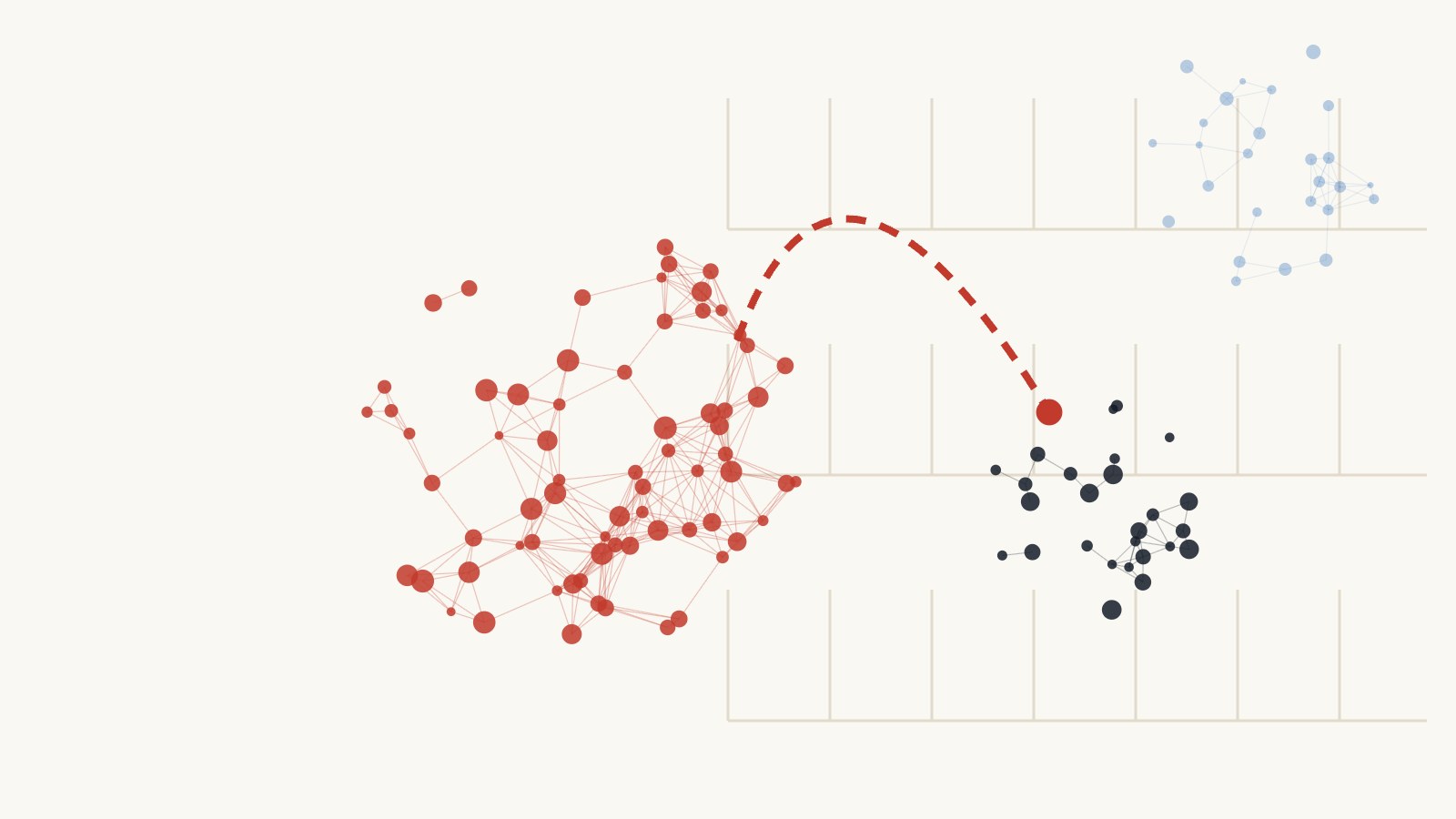
Forty days.
That is the gap between two documents that, read together, describe where digital parking payments in North America are headed. On October 8, the Justice Department’s Antitrust Division closed its review of Arrive’s purchase of Passport. Its reasoning rested in part on the finding that cities would still have meaningful alternatives if the combined company tried to exercise market power, and it named one of them: PayByPhone.1 On November 17, PayByPhone announced that it had completed its acquisition of HONK.2
The alternative just got bigger.
The deal at a glance
- Buyer
- PayByPhoneVancouver; owned by Lightyear Capital since March 31, 2026
- Target
- HONKToronto; founded 2013; payments, digital permits, reservations
- Closed
- Nov 17, 2026Terms not disclosed
- PayByPhone footprint
- ~1,400 clientsCities and operators in six countries; 125 million plus app downloads
- HONK footprint
- Several hundredPrivate operators, universities and cities in the US and Canada
- People
- Michael BackHONK founder and CEO joins PayByPhone as Chief Growth Officer
What PayByPhone bought
HONK sells mobile-first, unattended payments for parking: an app, text-to-park, scan-to-pay, digital permits and reservations. It describes its product as an asset-light parking management system for higher education, commercial real estate and municipal operators.23
PayByPhone brings scale and a new owner. Corpay sold the business to New York private equity firm Lightyear Capital in a deal that closed March 31, reporting roughly $420 million in net proceeds.48 HONK is Lightyear’s first add-on. The stated goals are to grow the North American client base, deepen the presence with universities and private operators, and speed up the North American product roadmap.2
Read that list again. Two of the three goals are about customers who are not cities.
2026: the year the field sorted itself
Arrive, the Swedish-headquartered parent of EasyPark, ParkMobile, RingGo, Flowbird and Parkopedia, closed on Passport this fall and gained citation issuance, permitting and more than 800 North American clients.56 PayByPhone, now independent and backed by private equity, has added HONK. And in February, Uber agreed to buy SpotHero, then last week put parking reservations inside the Uber app.7
It would be easy to call this a duopoly. The Justice Department looked hard at exactly that question and concluded otherwise, noting that smaller vendors have recently won municipal contracts.1 On-street payments for cities remain a competitive, RFP-driven market, and cities still hold the pen. What the year did change is the shape of the big players. Each buyer filled a different gap.
Figure 2
Three buyers, three different gaps filled
Arrive
bought Passport
What it added
- Citations
- Permitting
- Curbside payments
800+
Passport clients across North America
PayByPhone
bought HONK
What it added
- Off-street payments
- Digital permits
- Reservations
Hundreds
HONK operator, university and city clients
Uber
bought SpotHero
What it added
- Reservation marketplace
- Garage inventory
13,000+
Garages, lots and valets in about 400 cities
The new front is off-street
On-street mobile payment is a maturing product in most large cities. The open territory is off-street: campus lots, private surface lots, mixed-use garages, hospital and office parking. Much of that inventory has stayed uncontrolled because a gate, a booth and an attendant never penciled. Gateless systems built on license plate recognition and a phone in the driver’s hand change that math, and HONK built its business there.
PayByPhone did not buy an app. It bought a route into facilities where the city is not the customer.
Andrew Sachs
That has a direct consequence for owners and operators. When the payment platform is also the access and revenue control layer, the choice of payment vendor becomes a PARCS architecture decision. It should be made the same way: start from the operating requirements and the software capabilities you need, and let the vendor fit the design rather than the other way around.
Why universities matter here
Higher education is the quiet center of this deal. A campus is a small city with a single landlord: permits, visitor parking, event days, enforcement and a population that turns over every fall. HONK built its permit and campus business there, and PayByPhone named universities explicitly.2 A digital permit tied to a plate is more than a convenience. It becomes the parker’s account, the enforcement record and the occupancy data at once, which is why whoever holds the permit relationship holds the campus.
Five moves for owners, operators and cities
- Read your change-of-control clause this week. If you contract with HONK, your vendor now has a new parent. Know your rights on assignment, pricing, service levels and termination before the integration plan reaches you.
- Own the convenience-fee decision. Driver-paid session fees are the quiet economics of mobile payment. Decide who pays, how much, and whether the fee differs by channel, and put that policy in the contract rather than in the vendor’s app settings.
- Make data portability a requirement, not a request. Session, plate and permit data feed enforcement, PARCS reporting and rate setting. Require open APIs, regular data exports and a clean exit path so a platform change never strands your history.
- Do not procure as if there are only two vendors. The Justice Department’s own finding is that smaller vendors are winning contracts. A competitive RFP with a real third option is the best protection against consolidation pricing.
- Treat permits as the account. For campuses and permit-heavy operators, the permit system now defines the customer relationship. Choose it with the same care as the payment app, because increasingly they are the same product.
What we still do not know
The announcement does not say whether the HONK brand and app will survive, how existing HONK users will be migrated, or how HONK’s integrations with operator partners will be handled. Both companies say clients and drivers will see business as usual, with no service disruption.2 The release does not address enforcement, the capability Arrive gained with Passport, or whether pricing and fees will change. We will update this note as those answers arrive. For the reservation side of the same shift, see our analysis of Uber and SpotHero.
Andrew Sachs, PTMP, is president of Gateway Parking Services, a parking consultancy and systems integrator.
Sources
- US Department of Justice, “Statement of the Department of Justice Antitrust Division on the Closing of Its Investigation of Arrive AS’s Proposed Acquisition of Passport Labs Inc.,” Oct. 8, 2026. justice.gov
- PayByPhone and HONK, “PayByPhone Acquires HONK, Expanding its Parking Payments Platform Across North America,” Nov. 17, 2026. honkmobile.com
- Parking Today, “PayByPhone Acquires HONK,” Nov. 17, 2026. parkingtoday.com
- Corpay, Inc., Form 10-Q for the quarter ended June 30, 2026 (sale of PayByPhone). sec.gov
- Passport, “Arrive announces intent to acquire Passport,” Mar. 4, 2026. passportinc.com
- Pulse 2.0, “Arrive Completes Acquisition Of Passport To Build City OS For Autonomous Mobility.” pulse2.com
- Uber Newsroom, “Uber Parking has arrived,” Nov. 9, 2026; Pulse 2.0, “Uber Acquires SpotHero To Add Parking Reservations,” Feb. 25, 2026. uber.com
- Lightyear Capital, “Lightyear Capital Signs Agreement to Acquire PayByPhone.” lycap.com
 A