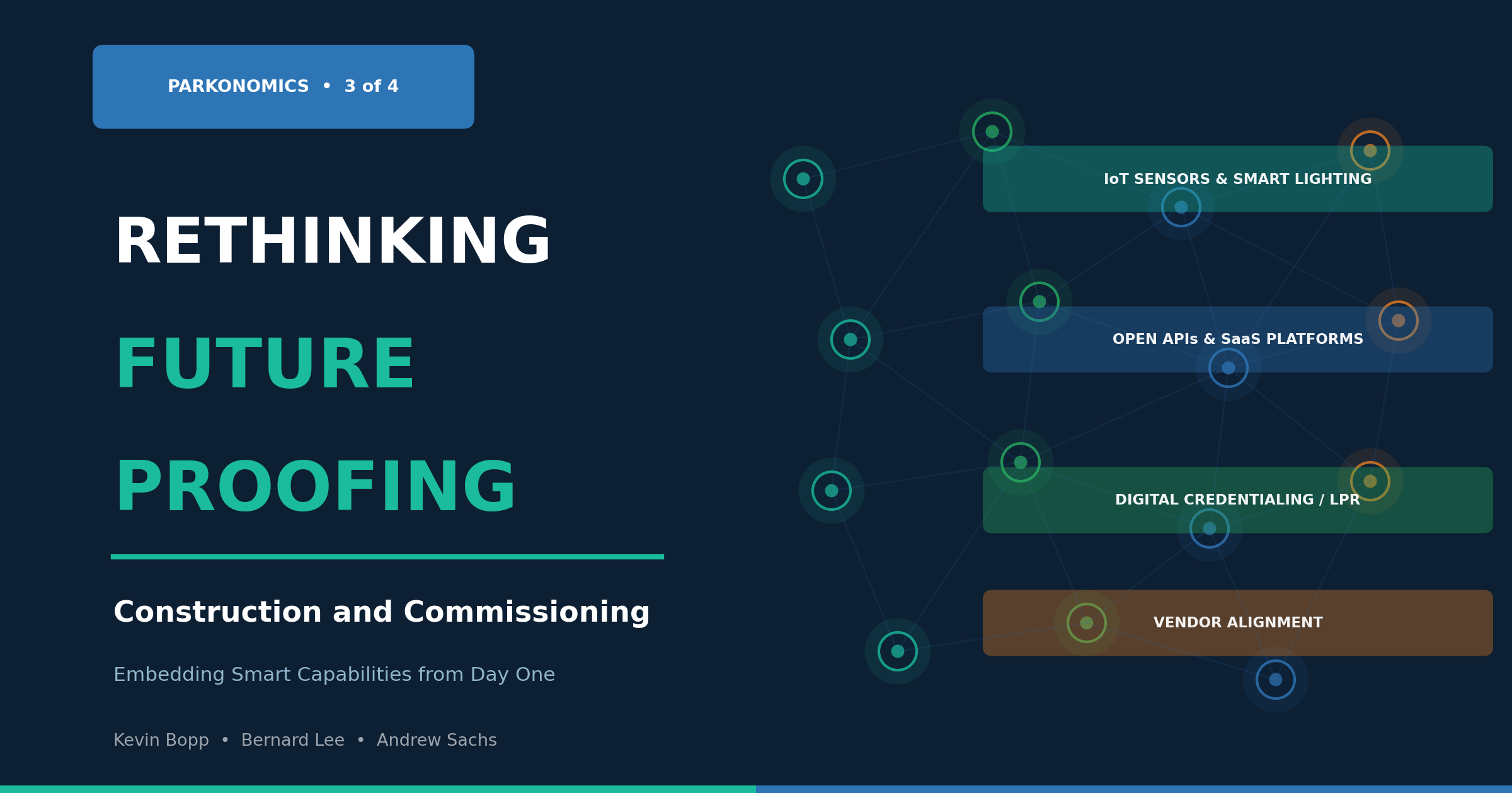
Construction as Nervous System Installation
The construction phase is where the vision of a future-proof parking facility truly takes shape — where theoretical plans transform into a tangible, tech-ready structure. This is not merely about pouring concrete and raising steel. It is a critical juncture for embedding the smart capabilities that will define the modern parking experience and ensure its long-term relevance in an evolving mobility landscape.
At its core, this stage involves the meticulous installation of the facility’s central nervous system: a robust network of sensors, cameras, and communication devices that will enable intelligent operations and seamless user interaction. Unlike mechanical systems, which can be accessed and modified with manageable disruption, digital infrastructure poured into concrete is largely permanent. This reality makes construction-phase technology commissioning one of the highest-leverage activities in the entire development process.
The gap between a facility that commissions correctly and one that does not is rarely visible at opening. It becomes visible two to three years later, when the technology requirements of a competitive market reveal what was — and was not — actually built in.
Technology infrastructure is among the most common casualties of construction-phase value engineering. Conduit runs get downsized. Electrical panels get specified to minimum code. Camera mounting points get relocated to wherever is structurally convenient rather than where sightlines are optimal. Each of these decisions is individually small. Collectively they produce a facility that opens with the right address but the wrong nervous system.
Intelligent Lighting: Beyond Energy Efficiency
The case for LED lighting in parking structures has been made and won. The more interesting and less-understood case is for sensor-integrated smart lighting — and it is not primarily about energy.
The shift to LED technology has already revolutionized energy efficiency in parking, delivering reductions of 40 to 70% over fluorescent baselines with dramatically longer fixture life. But the true power lies in smart lighting controls and the sensor network that rides on the lighting infrastructure. Modern sensor-integrated systems use each luminaire as a node capable of detecting occupancy, counting vehicles, monitoring air quality (carbon monoxide drives ventilation requirements and operating costs), and triggering emergency lighting responses.
All of this data flows through the same network that runs the lights — meaning the marginal cost of adding sensing capabilities to a lighting specification is a fraction of what standalone sensor infrastructure would cost. For operators, the result is real-time occupancy by level and zone, ventilation triggers tied to actual CO readings rather than schedules, emergency event detection, and the historical utilization data needed to support dynamic pricing and reservation products.
Connectivity: The Operational Backbone
In our hyperconnected world, reliable Wi-Fi and seamless cellular service throughout a parking facility are no longer a convenience amenity — they are operational infrastructure. A PARCS system that cannot maintain a reliable connection to its cloud platform does not function. An LPR camera that cannot transmit plate reads in real time does not enable the enforcement and access products that define competitive operations. The connectivity infrastructure is the medium through which all operational technology runs.
Concrete is an effective radio frequency barrier. Signal penetration into below-grade levels is poor, and multi-level structures create interference patterns that make consumer-grade equipment unreliable. Installing Wi-Fi repeaters and a distributed antenna system (DAS) during construction guarantees that customers remain connected while simultaneously providing a resilient communications backbone for the facility’s own sophisticated digital systems.
DAS is the correct solution for new construction — a network of low-power antennas distributed throughout the facility, fed by a central signal source, providing consistent coverage on every level for all carriers simultaneously. The conduit and antenna runs are a fraction of the cost when installed before walls close. A facility that defers DAS to avoid upfront cost typically faces a much larger retrofit bill within three to five years as operational system requirements outgrow what basic connectivity can support.
PARCS Selection: Open Standards Are Non-Negotiable
The parking access and revenue control system (PARCS) is the most consequential technology selection in a parking facility’s lifecycle. It processes every transaction, controls every entry and exit, generates all operational data, and serves as the integration hub for every other technology the facility will deploy.
The PARCS landscape is littered with the remnants of proprietary, walled-garden, mechanical-forward systems with software bolted on as an afterthought that quickly become obsolete — rendering facilities incapable of adapting to new innovations. A key to true future-proofing lies in selecting technology partners who are unequivocally committed to open standards and seamless interoperability.
Whereas mechanical gate arms may or may not be required, SaaS-based PARCS providers are the key to a flexible future. This ensures that the initial investment remains viable and adaptable for decades to come, unlike the rigid systems of the past that necessitated costly and disruptive overhauls. The commitment to open standards manifests in several crucial ways: API documentation that any compliant third party can integrate against, software delivered as a service with remote updates, and hardware that can be replaced without replacing the software platform.
Contactless Entry and the Frictionless Transition
The COVID-19 pandemic significantly accelerated the demand for contactless solutions across all facets of daily life. In the parking realm, this extends beyond mere contactless payments to encompass touch-free entry and exit processes. Designing for these capabilities — even if they are not fully activated when the facility opens — is a critical component of a truly future-proof strategy.
To support these critical systems, the necessary infrastructure — including high-resolution cameras at all entry and exit points, as well as robust network connectivity — must be meticulously planned and installed from the very beginning of construction. The lane geometry is equally important: a gateless system requires approach distances and lighting conditions that allow LPR to achieve reliable read accuracy before the vehicle commits to entering. A lane designed around a gate arm may not provide adequate approach for gateless operation — a design-phase decision, not a technology-phase one.
LPR performance is the foundational variable. Every parking feature that depends on plate recognition — permitted parking management, reserved space enforcement, frictionless payment, gateless entry — is only as reliable as the underlying camera infrastructure. Getting this right costs nothing extra if addressed in design. Correcting it afterward may require structural modification.
Commissioning: Verification, Not Inspection
The most consequential shift in construction-phase technology management is the reframe of commissioning from a final inspection to an embedded verification process. A final inspection at certificate of occupancy can confirm that systems are installed and powered. It cannot correct anything that requires opening a wall, re-pulling cable, or adjusting infrastructure that is now in concrete.
Effective commissioning happens earlier — at the milestones when correction is still possible. Conduit and pull strings verified before pours. Fiber continuity tested before walls close. Camera mounting and sightlines confirmed before ceilings are finished. Wi-Fi coverage mapped before access is restricted. LPR accuracy tested under representative conditions before the facility opens to the public.
The items that cannot be corrected after occupancy should be treated as hard stops in the construction schedule — not punch list items to be addressed at completion. A pull string not left in a conduit before the pour is a permanent constraint. A camera mounting angle that produces unacceptable LPR accuracy in direct sun is not a warranty call — it is a sightline problem that may require structural modification.
Frequently Asked Questions
Why does PARCS selection matter so much at the construction phase?
Because the PARCS system determines what the facility can and cannot do for its entire operating life. A proprietary system that cannot integrate with third-party reservation platforms, navigation apps, or enforcement tools locks operators into a shrinking competitive position with no affordable exit. The switch cost for a legacy PARCS system in an operating facility — hardware replacement, data migration, operational disruption — is substantial. Getting this decision right at the outset is dramatically cheaper than correcting it later. The key criterion is not feature count at launch; it is whether the vendor’s architecture is genuinely open and whether the software is cloud-delivered.
Is sensor-integrated lighting worth the premium over standard LED?
Yes, for most commercial parking facilities — and the financial case is stronger than the energy efficiency argument alone. The incremental cost of specifying sensor-integrated luminaires over standard LED at construction is modest. The cost of retrofitting a separate sensor layer afterward (separate mounting, separate cabling, separate network) is multiples higher. The operational data generated — real-time occupancy, CO monitoring for ventilation control, emergency event detection — has direct revenue and cost implications that compound over time. The lighting system and the sensor network are, in effect, the same investment when specified correctly at construction.
Does a facility need a Distributed Antenna System (DAS) or will enterprise Wi-Fi suffice?
Enterprise Wi-Fi is the minimum standard for any facility running cloud-based PARCS, LPR cameras, or occupancy systems. But Wi-Fi alone does not solve the cellular coverage problem — and users expect their phones to work on every level. DAS addresses both: it provides consistent multi-carrier cellular coverage throughout the facility while also serving as backbone infrastructure for operational systems. For new construction, the correct answer is both enterprise Wi-Fi and DAS conduit infrastructure, whether DAS is fully deployed at opening or not. Installing the conduit at construction and deferring the active components is a reasonable cost management strategy; omitting the conduit entirely is not.
What LPR accuracy rate is required for gateless operation?
A minimum of 95% read accuracy under representative operating conditions — daylight, low light, glare from direct sun, varied vehicle types, and real-world plate conditions — is the practical threshold for gateless operation without generating unmanageable exception queues. Below 95%, the manual exception handling burden eliminates most of the operational efficiency gain that gateless entry is supposed to deliver. Achieving this threshold requires camera placement calibrated to approach geometry, lighting designed to minimize glare in the camera field of view, and sufficient approach distance for the system to read the plate before the vehicle commits to entry. All of these are design and construction decisions, not software decisions.
When should technology commissioning happen during construction?
Commissioning should be embedded throughout the construction schedule at the milestones where correction is still possible — not appended as a final inspection at certificate of occupancy. The most critical verification points are before concrete pours (conduit and pull strings), before walls close (fiber continuity, Wi-Fi coverage mapping, initial camera sightline review), and before ceiling access is restricted (final camera placement and LPR angle confirmation). Anything that requires opening a finished wall or cutting finished concrete to correct is not a commissioning item — it is a project failure. Treating these as hard stops in the construction schedule rather than punch list items is the operational standard for a technology-forward facility.
Sources
- Bopp, K., Lee, B., and Sachs, A. “Parkonomics: Construction and Commissioning.” Urban Land, Urban Land Institute, December 11, 2025. urbanland.uli.org
 A
A