| ||||||
|
The Economics of How Cities Move
Every other Thursday, from the editors of parkonomics.co
| ||||||
|
From the editors
Last issue, we told you that the cheapest place to fix garages is on paper. This installment is about paper that gets so far ahead of what’s possible that reality can’t be seen in the rearview mirror. California now lets mid-rise housing go up next to train stations that won’t exist until some of today’s toddlers are paying property tax. At LAX, a 4,300-space garage built for a train has spent five years hosting shuttle buses, like a church that ordered a pipe organ and got a kazoo. Plans are supposed to lead. They aren’t supposed to lead by twenty years and then leave no forwarding address. Hit reply and tell us about the monument in your town to something that never showed up. Andrew, Kevin and Frank
| ||||||
|
Just Parked · New on Parkonomics
Field Notes
When Zoning Arrives Before the Train
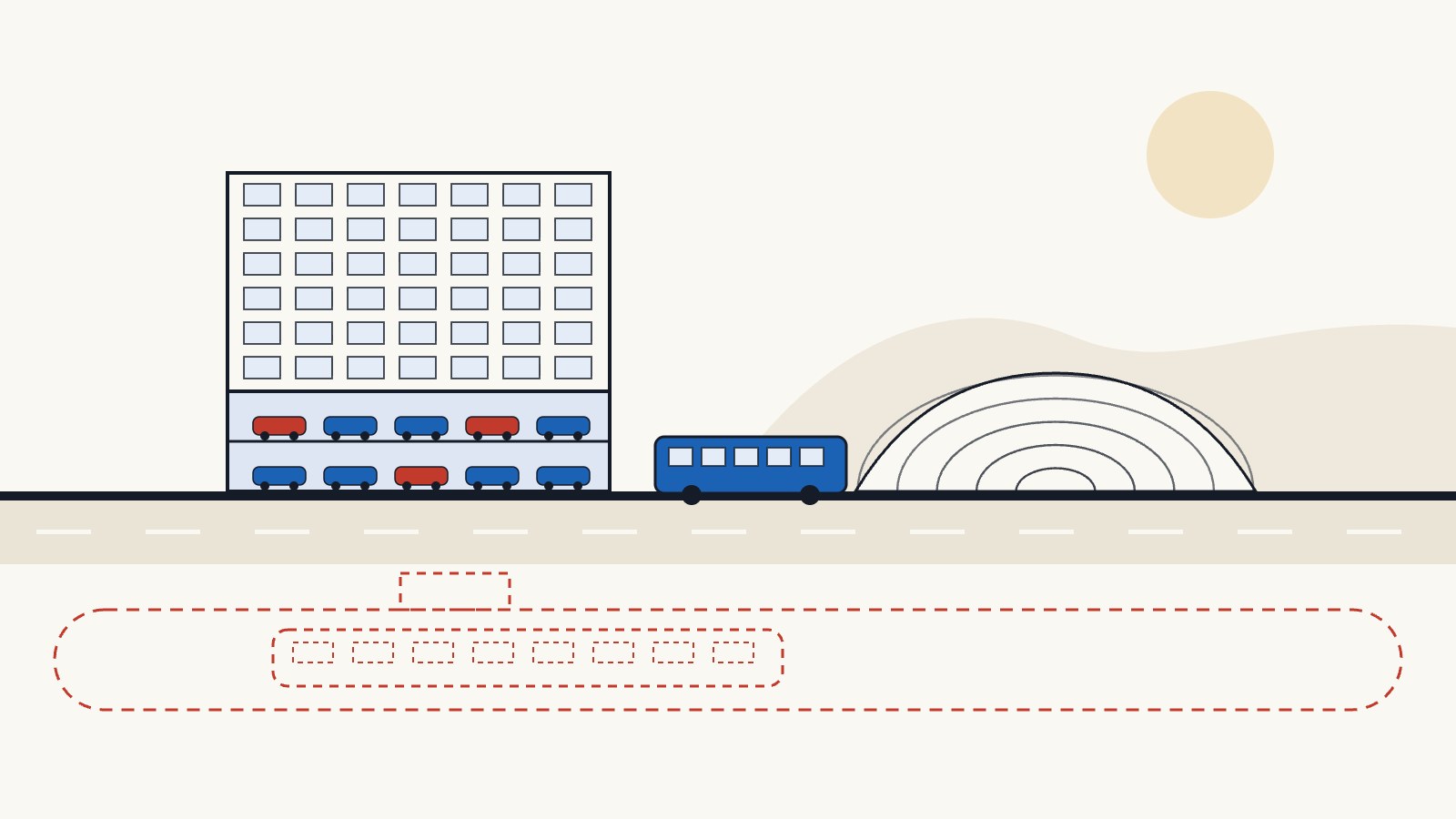
California’s SB 79 lets mid-rise housing rise around transit stops, including stops that are, for now, a dotted line on a planning map. Parking relief arrives with the zoning. The train arrives in the late 2040s, give or take a budget cycle. So in Hollywood, you can build the apartments today, skip the parking today, and wait about two decades for the reason you skipped it. Somebody has to park in the meantime. This piece maps exactly where, with a live map of every stop the law counts.
New to the law? Our SB 79 explainer covers the tiers, the height limits and what it does to parking, in plain English.
| ||||||
|
From the Vault
Something we published a while back that has aged suspiciously well.
| ||||||
| ||||||
|
Outside the Lines
Somebody else’s parking story. Our unsolicited commentary.
The Drive · New York
New York Found Its Most Wanted Driver. She Was Home the Whole Time.
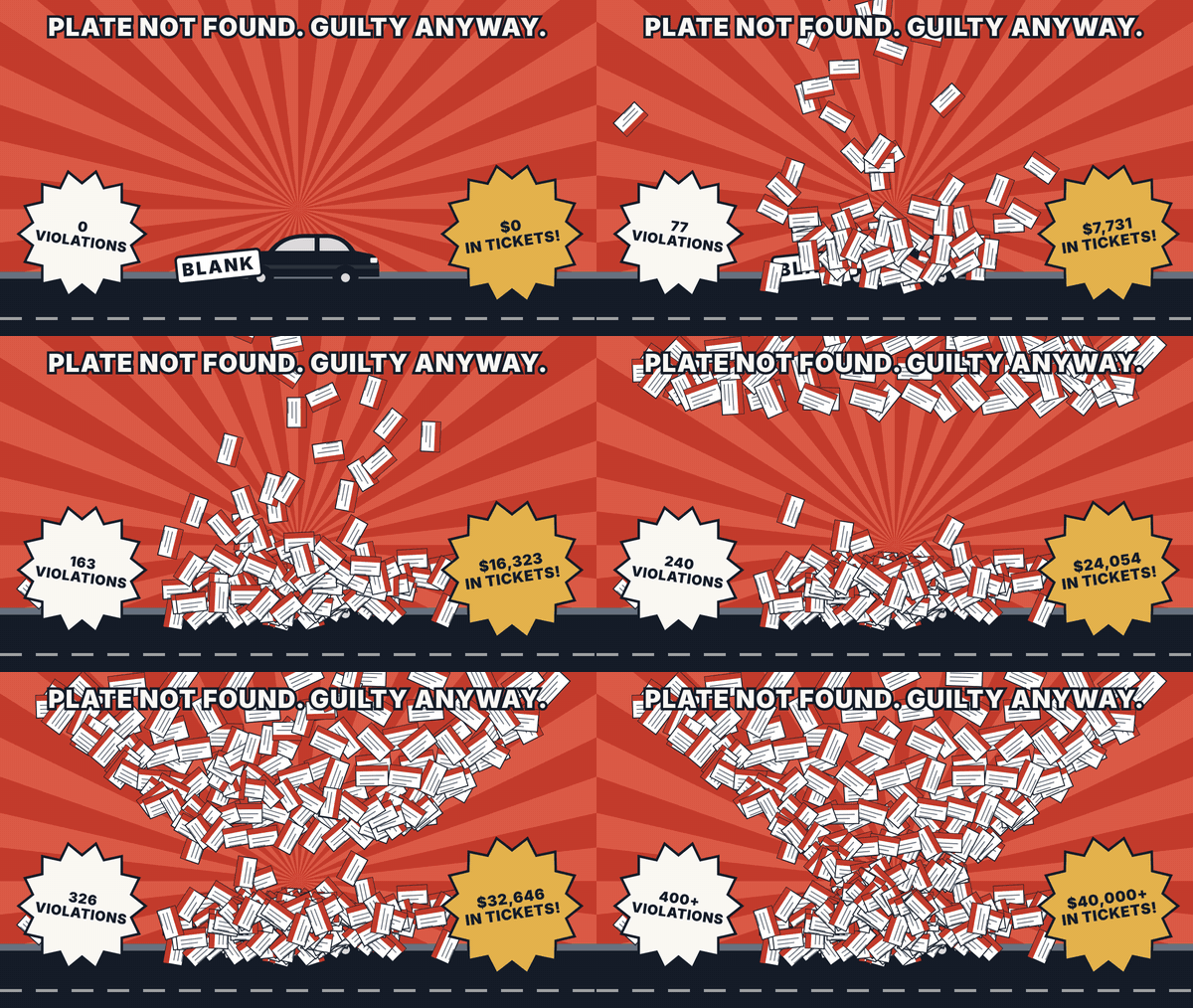
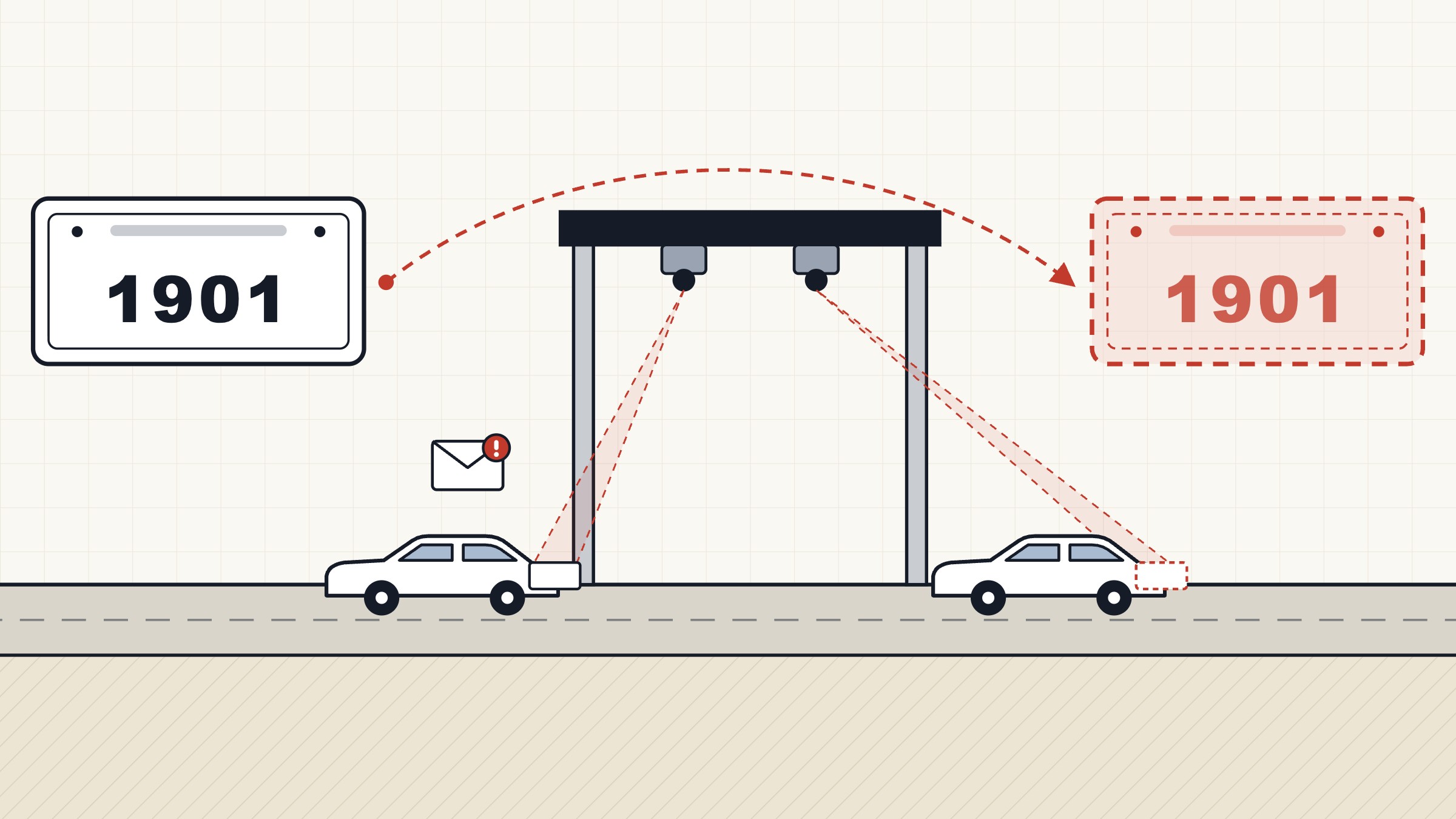
Every city has a junk drawer. New York keeps its junk drawer in its ticketing software. When a camera can’t read a plate (mud, rust, a bike rack, a guy in a ski mask who knows exactly what he’s doing), the system doesn’t shrug. It types BLANK and moves on, confident that BLANK is nobody. BLANK was somebody. Her last name was Blank, and she put it on a vanity plate, because she was a person with a sense of humor and had not yet been introduced to the State of New York. Overnight she became the most prolific driver in the five boroughs. She ran red lights in Queens while blocking hydrants in the Bronx while double-parking outside a bodega in Bushwick at 3 a.m. More than 400 violations. Over $40,000. Not a criminal, a vibe. Every scofflaw too lazy to clean a plate handed his tickets to the one woman in New York who’d actually filled hers out. Nobody in the system ever asked how one Honda pulled off 400 crimes. Software doesn’t ask questions. It sends invoices. It took several judges to establish that a human being can’t be in 400 places at once, a legal theory New York has apparently never had to test. The DMV’s fix was pure New York: don’t fix the software, delete the word. BLANK is gone from the vanity plate list. Her new plate reads KNALB. Somewhere a parking camera has already filed KNALB under “suspicious.” Give it a month. Read the receipts → | ||||||
| ||||||
|
The Coda
A hidden gem, or a classic with the varnish scraped off.

Michael Jackson
Thriller (1983)
Anyone who has planned, built, run, or simply used a parking facility knows the thrill. For the people who plan and build garages, it comes early: a bid that lands over budget, a change order that rewrites the schedule, or the design review where someone finally asks where the gate arms are supposed to go. For operators, it’s opening day, when the entry queue starts creeping toward the street and you find out whether the circulation really works. And for everyone else, it’s the late-night walk back to the car: a dim stairwell, a ramp that seems to lead nowhere, and that uneasy moment of not remembering which level you parked on. Hollywood has long cast the empty parking garage as the scariest room in the city. Good design takes away that role. Bright, even lighting, open sightlines, visible stairs, and simple wayfinding turn a place people fear into one they don’t think twice about. “Thriller” earns its spot on the merits, too. The 14-minute short film, directed by John Landis, was bold, cinematic, and unforgettable. It became the first music video selected for the Library of Congress National Film Registry. But behind the spectacle was precise planning: every dancer knew exactly where to move and when. That’s the argument of our last issue’s white paper, Designed to Park, or Designed to Impress? The best projects are memorable and carefully choreographed from the start. Save the thrills for the screen, not the stairwell. Play the Coda →Picked by Frank
| ||||||
| ||||||
| ||||||
|
Not on the list yet? Get the next issue in your inbox, every other Thursday. Have a link, a number or a song for us? Write to [email protected]. |
Liked this one? The next issue is two weeks out.
Every other Thursday. Free, four minutes, and easy to leave.
We will send one email to confirm. Click it and you are in.